How to set up and use passkeys
Estimated 4 minute read
Table of contents
- You will learn
- Before you begin
- Set up a passkey
- Log in with a passkey
- Manage your passkeys
- Remove a passkey
- Outcome
- Additional resources
You will learn
Learn how to set up and use a passkey to log in to Klaviyo.
A passkey lets you sign in using your device's Face ID, fingerprint, or PIN instead of typing a password.
Why use a passkey?
Passkeys are a faster and more secure way to log in. A biometric or PIN check replaces typing a password and entering an MFA code, and your credentials never leave your device.
Setting up a passkey does not remove your password. Your password stays active as a fallback, so you're never locked out if you lose access to a device with a passkey registered.
Before you begin
Please note the following:
- Passkeys are available to non-SSO users. If your company enforces SSO, passkeys are not currently supported for your account. If SSO is enabled but not enforced, passkeys can be used as an MFA option by users on the exemption list.
- If MFA is enforced on your account, you'll need to reauthenticate with MFA before you can set up a passkey.
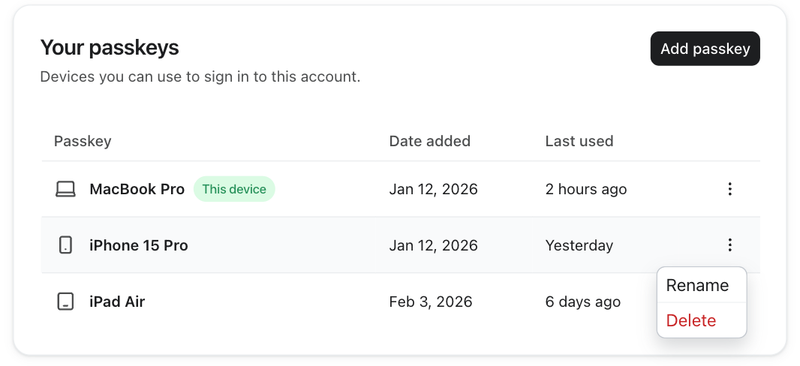
- You can set up passkeys on multiple devices. Each one appears as its own entry, and none of them affect your password or your other passkeys.
- Passkeys require a device and browser that support the WebAuthn standard. Most modern phones, laptops, and browsers support this. If yours doesn't, you can continue to log in with your password.
Set up a passkey
- Click your organization name in the bottom left corner.
- Click Settings.
- Select Security.
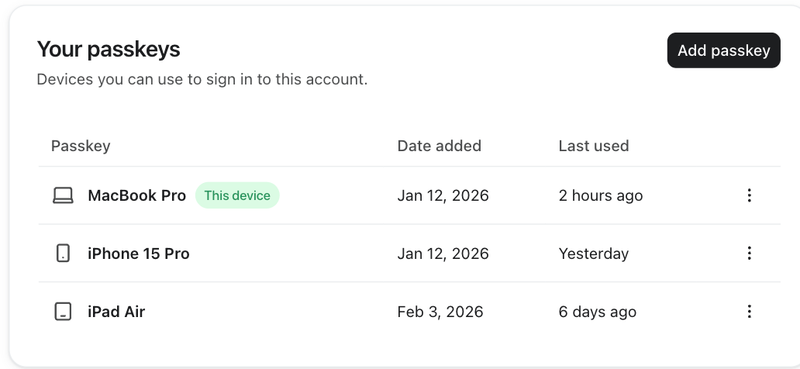
- Find the passkeys section and click Add a passkey.
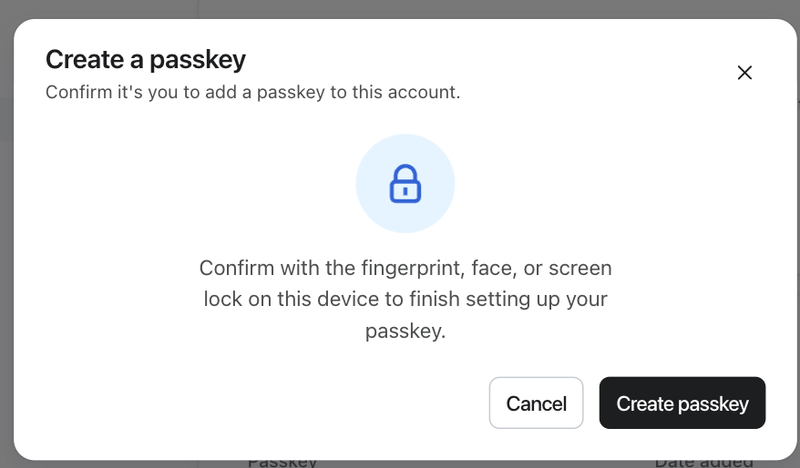
- If prompted, reauthenticate with MFA.
- Follow your device's prompt to verify with Face ID, fingerprint, or PIN.
Rename a passkey
- Navigate to Settings > Security.
- Find the passkey you want to rename.
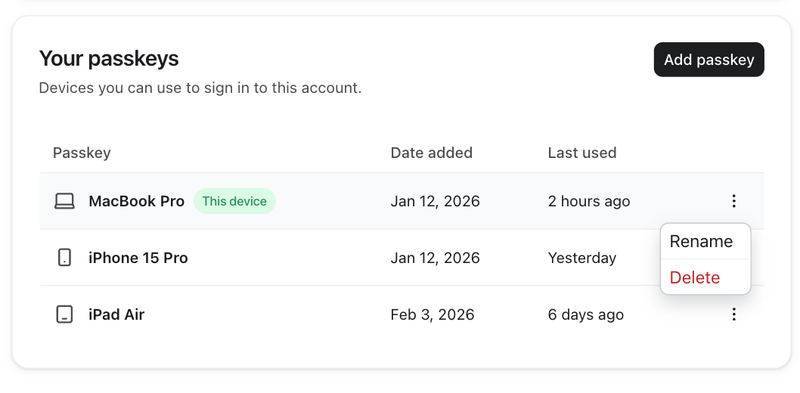
- Click the menu next to it.
- Select Rename and enter a new name.
Log in with a passkey
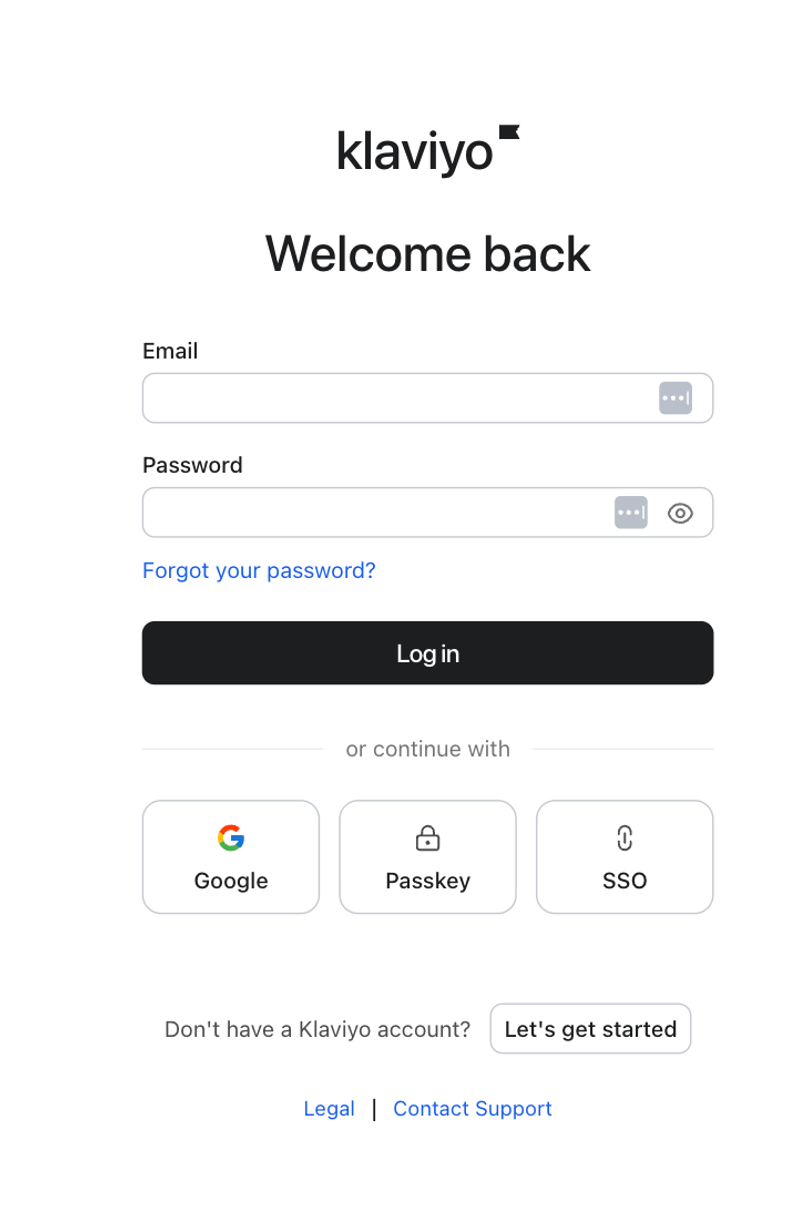
- Enter your email address on the login screen.
- If you have a passkey registered, you'll be prompted to verify with Face ID, fingerprint, or PIN.
- Once verified, you're signed in. No password needed.
Manage your passkeys
All of your registered passkeys are listed under Settings > Security. From there, you can view every device that has a passkey registered to your account, rename a passkey, or remove one.
Remove a passkey
- Navigate to Settings > Security.
- Find the passkey you want to remove.
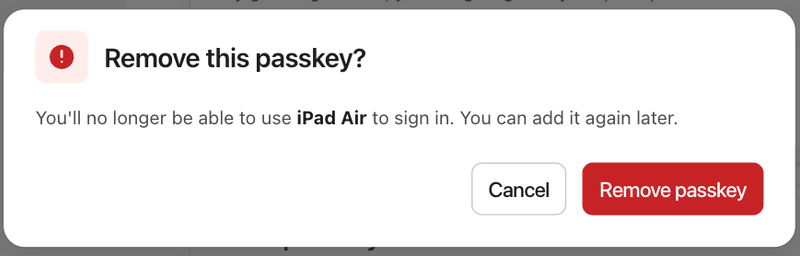
- Click Delete.
- Confirm the removal.
Additional resources
- How to set up multi-factor authentication (MFA) Learn how to set up multi-factor authentication (MFA) to help make your Klaviyo account or portfolio more secure.
- How to set up single sign-on (SSO) Learn how to set up single sign-on (SSO) for your Klaviyo account or portfolio.
- How to reset multi-factor authentication for a user Learn how to reset multi-factor authentication (MFA) for a user.
FAQ (optional section, common on Security articles)
Does setting up a passkey remove my password? No. Your password stays active even after you register a passkey.
Can I use passkeys with SSO? If SSO is enforced for your company, passkeys aren't supported. If SSO is enabled but not enforced, users may use passkeys as another form of MFA.
Can I use passkeys and MFA together? Yes. You can set up both and choose which method to use when you log in. On paid accounts, MFA must be set up before you can add a passkey.
Can I sign up for Klaviyo using a passkey? Not in this release. Passkeys can be added after you've signed up, but not used to create a new account.
What if multiple people share the same login? Each person can register their own passkey on their own device, since an account can have multiple passkeys. We don't recommend shared logins, as they introduce security and accountability risks.