How to use Klaviyo email and SMS together
You will learn
Learn the pros and cons of SMS and email, strategies for using both channels in a flow or campaign, and tips for how to implement these strategies.
Pros and cons of email and SMS
Email and SMS have their own advantages and disadvantages, but they complement each other when used together. Where email shines, SMS struggles, and the same is true in reverse. Below, we go over what each channel has to offer.
Pros
Email has 3 key benefits:
- Many people will sign up for email marketing
- You can send more often with email than SMS
- Email is easier to get started with
You're able to reach more people and send more often with email than SMS. Many people don't hesitate to give out their email, particularly if it's a brand they're interested in. Thus, email helps you directly reach a large portion of your target audience.
Another benefit is that you can send more often than with SMS. This allows you to frequently send updates and information to subscribers via a channel you fully own. You can quickly iterate on what works well with subscribers and then create custom messages targeted to your audience in order to build a long-lasting relationship with them.
Email has been around a long time, and most people are familiar with email sending best practices (e.g., don't send spammy messages). There are also fewer laws surrounding email, so you can send a wider range of content, at more times of day, and to more people than with SMS. In general, it's quicker to get up and running with email, as there's a lot less compliance to worry about.
Cons
The cons of email are:
- Not all recipients read an email
- Takes longer for people to open the message
Not everyone you send an email to sees your message. Open rates vary by audience, and Apple Mail Privacy Protection can record an open without someone reading the email. Learn more about email deliverability and how to measure engagement.
Email engagement can build over time, so allow time for recipients to read and respond before judging a campaign’s results.
SMS
Pros
The pros of SMS are that:
- SMS is useful for short, time-sensitive messages
- People who consent to SMS tend to be more highly engaged with your brand
SMS can help you reach subscribers with time-sensitive messages, such as a flash sale. However, delivery does not confirm that someone read the text, and Klaviyo does not track SMS opens. Use clicks to understand how recipients engage with links in your messages.
Those who sign up for SMS marketing from your business tend to be more invested in your brand than your average email subscriber. They are almost like your VIPs, brand enthusiasts who you can cultivate long-lasting relationships with.
Cons
The cons of SMS are the opposite of the pros for email:
- Fewer people are willing to sign up for SMS
- You can't send as often
- There are more compliance regulations you have to adhere to
Fewer people are willing to give their phone number than email, so list growth is slower and you can’t reach as many via this channel.
Further, it’s better to not send as often with SMS. Since texts will send an alert to someone’s phone, if you send too frequently, your recipients may mute your messages or unsubscribe.
There are also more things to read up on before you start sending SMS. You can't send too early or late, or you risk breaking quiet hours regulations. Certain content is also prohibited for SMS, such as gambling or sex, hate, alcohol, firearms, and tobacco (SHAFT). Klaviyo supports age gating for eligible alcohol, firearm, tobacco, and sex-related businesses in certain countries. Requirements depend on the business category, recipient country, and sending number type. Review the prohibited-content requirements before collecting SMS subscribers or sending messages.
Collecting subscribers
Email and SMS consent are separate, so you must collect each individually.
With SMS, you also have to include copy that explicitly states that by signing up, the person consents to receive SMS marketing messages from your business. This is usually done via disclosure language.
Use a multi-step form
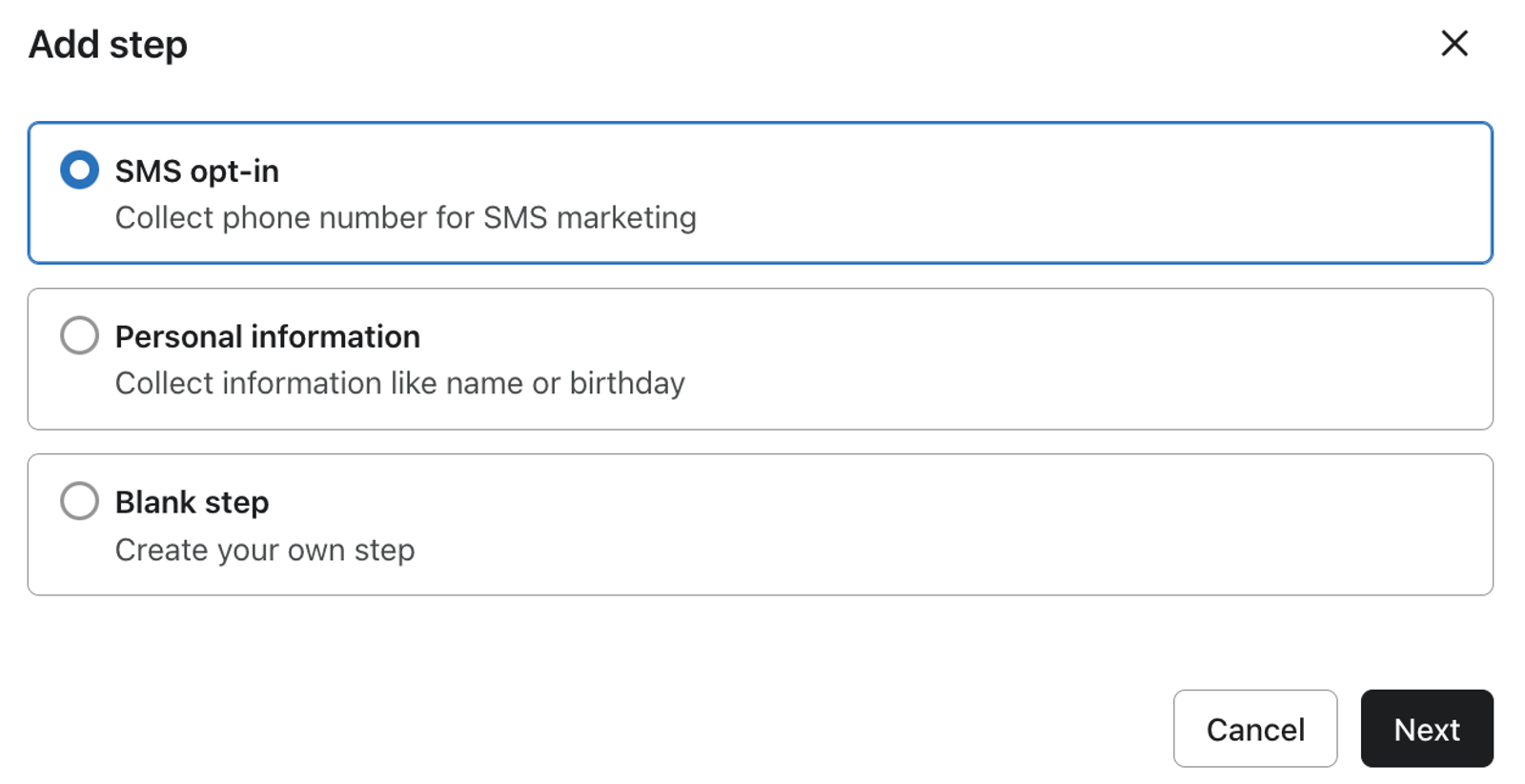
The best approach for collecting email and SMS consent is through a multi-step form.
Typically, you would collect the email as the first step, as more people will be willing to fill that out. Then, add a second step for SMS.
If a visitor only completes step 1, you can still collect their email subscription and encourage them to subscribe to other channels in the future. If your email list uses double opt-in, they must confirm their subscription before you send marketing emails.
Targeting the 2 channels
To target each channel, create:
- A list or segment of your email subscribers
- SMS subscribers segment that includes everyone subscribed to SMS, even if they also subscribe to email
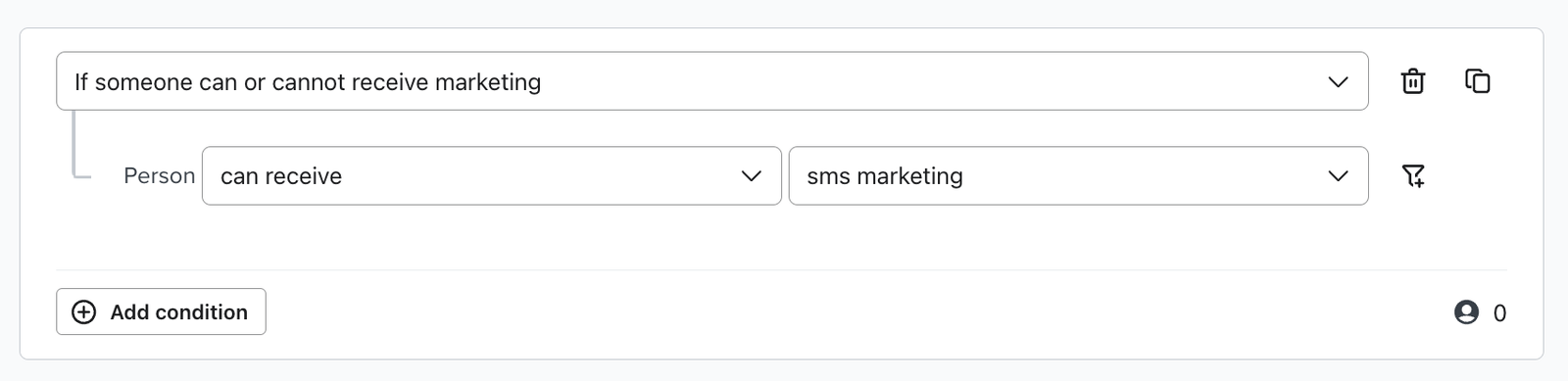
As you grow each channel, build out more segments for both email and SMS. However, you don’t want to divvy up your subscribers when you only have a few for one channel. The only exception is engagement, as you shouldn’t over-message those who haven’t recently shown interest in your brand.
Your segments for SMS and email can be almost exactly the same. In either case, you can group subscribers by profile properties, location, behavior, etc. As long as you’ve collected that data, the channel doesn’t matter; you can group subscribers and become really targeted in your messaging. Include the appropriate channel subscription condition so each segment contains people who subscribed to that channel.
Below are some examples of segments you can create for both email and SMS, depending on your business:
With these and other advanced segments, you can become more targeted in your messaging and also learn more about your audience.
Messaging your subscribers
Regardless of whether you’re sending a campaign or setting up a flow, prioritize your SMS subscribers when messaging both channels. While your email subscribers are important and should not be neglected, giving out a phone number is more personal than an email. Thus, it is typically better to treat SMS subscribers with greater care and preference.
If all of your subscribers are supposed to get a certain message, we suggest sweetening the deal for SMS subscribers (and, if applicable, your email VIPs). For instance, you can provide a better discount, free shipping, early access, etc.
Campaigns
With campaigns, there are a couple more ways you can easily provide value to SMS subscribers. One way is to send the SMS campaign several hours or days ahead of the email so that SMS subscribers get the information first. Another option is to provide your SMS subscribers with exclusive information that email subscribers, site visitors, and social media followers don’t have access to.
Before creating the SMS campaign, set up text messaging in your account and collect SMS consent from your recipients.
First, create the SMS campaign:
- Go to Campaigns > Create campaign. Name your campaign and select Single channel.
- Select Text message, then click Continue.
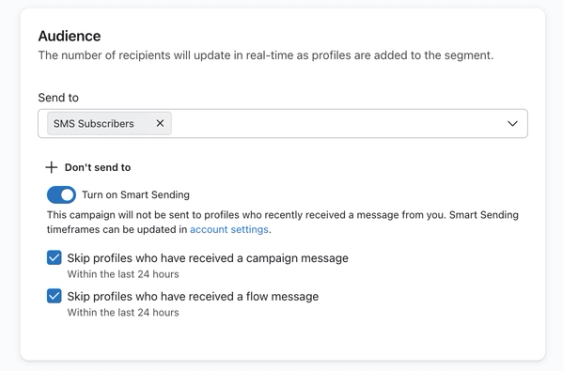
- Under Send to, select your SMS subscribers segment, including people who also subscribe to email.
- Click Next, create your message content, then click Next to review the campaign and resolve any errors.
- Click Schedule or send. Choose when to send, review the time zone, then click Schedule message or Send now.
Klaviyo skips profiles who have not consented to SMS. Selecting your SMS subscribers segment helps you target the intended audience, but the recipient count is still an estimate: consent changes, sending settings, or delivery failures can affect who receives the message.
Next, create an email campaign:
- Go to Campaigns > Create campaign. Name your campaign and select Single channel.
- Select Email, then click Continue.
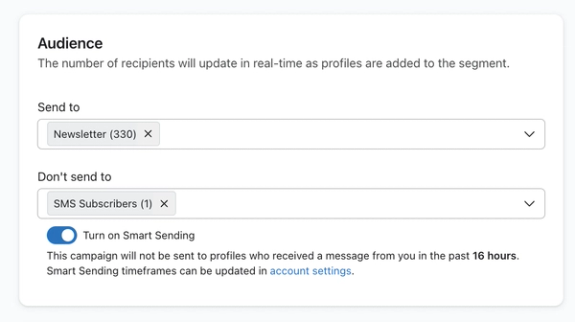
- Under Send to, select your email subscribers list or an engaged segment of email subscribers.
- Under Don't send to, select your SMS subscribers segment.
- Excluding this segment keeps people who subscribe to both channels out of the email campaign. If you leave them included, they may receive both versions of the message.
- Excluding this segment keeps people who subscribe to both channels out of the email campaign. If you leave them included, they may receive both versions of the message.
- Click Next, add the subject line, sender details, and email content, then click Next to review the campaign and resolve any errors.
- Click Schedule or send. Choose a time after the SMS campaign, then click Schedule message or Send now.
Alternatively, use an omnichannel campaign to manage email and SMS messages within one campaign. You can create paths for different audiences and choose the messages and send times for each path.
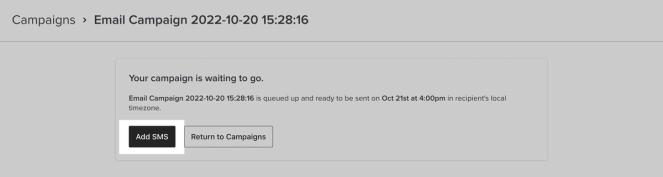
Learn more about getting started with omnichannel campaigns.
Flows
When you have a flow with both emails and SMS, it’s important to remember that someone may be consented to both channels.
Use a conditional split based on whether someone can receive text message marketing to send SMS subscribers down a different path from other profiles. The other path can contain email messages for email subscribers; not subscribing to SMS does not mean someone is subscribed to email.
To avoid sending too many text messages, you shouldn't send an SMS for every email you have. Instead, decide which channel to prioritize for this particular communication.
Next steps
We encourage you to test how your subscribers like to communicate so that you can serve up different content to your various audiences. Keep in mind that SMS and email subscribers may differ from each other; e.g., SMS subscribers might appreciate a more informal tone and more emojis compared to email subscribers. Continue to test, analyze, and optimize how you interact via each channel so that you can find what works best for your brand and audience.
Additional resources
- Understanding the difference between email and SMS
Learn how email and SMS differ as as well as when to use each channel.
- promote a new product launch with omnichannel marketing
- SMS marketing strategies for all levels [+12 Pro tips]