How to localize Customer Hub for multi-language stores
You will learn
Learn how to configure Customer Hub for international audiences, including how automatic system translations work and how to generate and edit translations for your custom content.
If you also sell in multiple markets with market-specific inventories, currencies, etc., please refer to how to use Customer Hub with Shopify Markets.
Customer Hub for Shopify currently supports standard storefronts and Shopify Headless. For WooCommerce, see Getting started with Customer Hub for WooCommerce.
Overview
Customer Hub supports localization, allowing you to provide an experience in your customers’ languages.
There are 2 types of translations within Customer Hub:
- System Strings: Standard UI text (e.g., "Orders," "Profile," buttons) which Klaviyo automatically translates for you.
- Custom Content: Text you create (e.g., welcome messages, FAQs, and content blocks), which you can translate with AI and edit manually.
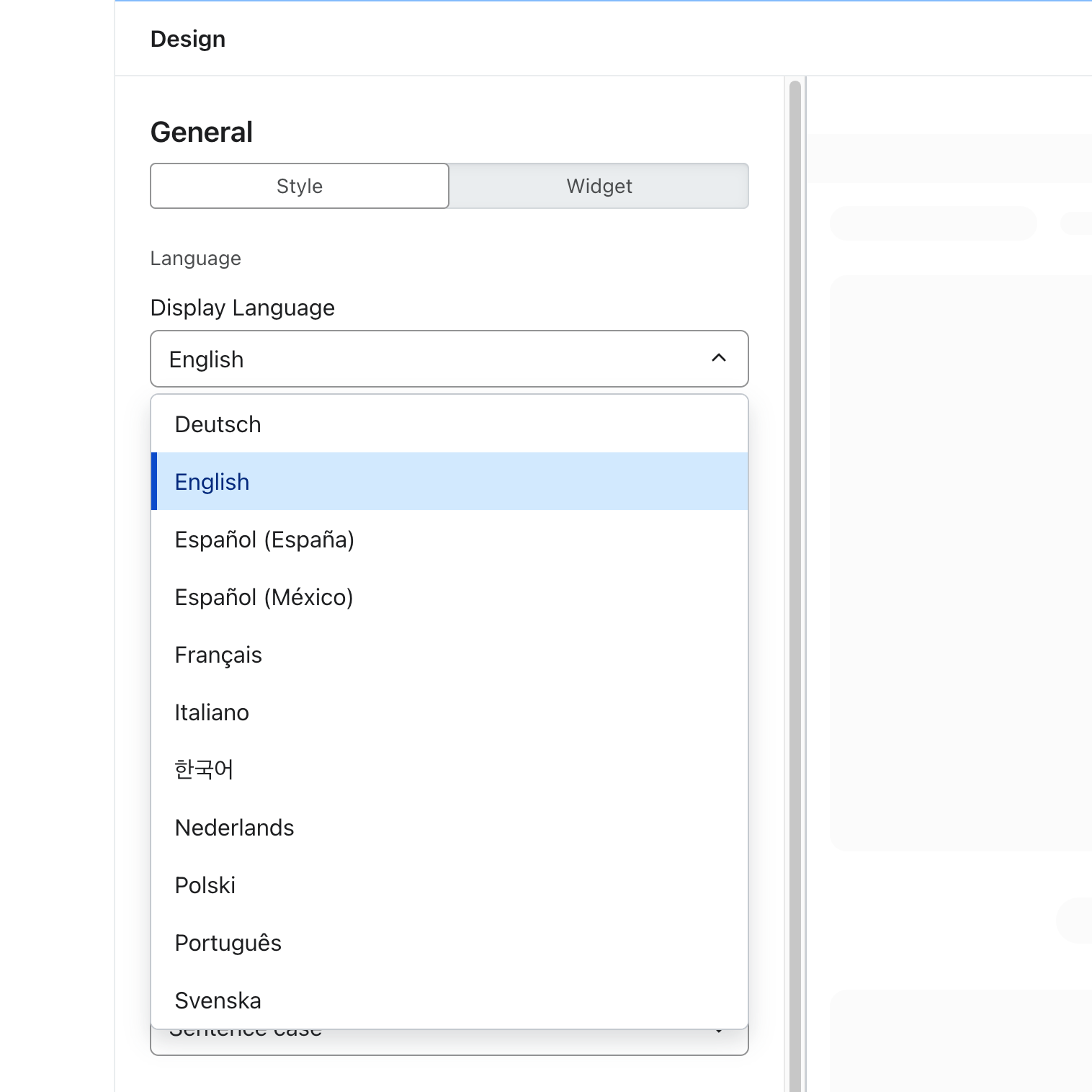
Supported languages and locales on your website
Klaviyo provides automatic system translations for a wide range of languages, including:
- English (United States) — en-US
- English (United Kingdom) — en-GB
- English (Australia) — en-AU
- French (France) (Français) — fr-FR
- German (Germany) (Deutsch) — de-DE
- Italian (Italy) (Italiano) — it-IT
- Spanish (Spain) (Español — España) — es-ES
- Portuguese (Brazil) (Português — Brasil) — pt-BR
- Korean (South Korea) (한국어) — ko-KR
- Danish (Denmark) (Dansk) — da-DK
- Dutch (Netherlands) (Nederlands) — nl-NL
- Finnish (Finland) (Suomi) — fi-FI
- Hungarian (Hungary) (Magyar) — hu-HU
- Japanese (Japan) (日本語) — ja-JP
- Norwegian Bokmål (Norway) (Norsk bokmål) — nb-NO
- Polish (Poland) (Polski) — pl-PL
- Spanish (Mexico) (Español — México) — es-MX
- Swedish (Sweden) (Svenska) — sv-SE
- Icelandic (Iceland) (Íslenska) — is-IS
- Portuguese (Portugal) (Português — Portugal) — pt-PT
If a regional locale isn’t supported, Customer Hub uses a supported locale for that language. If the language isn’t supported, it falls back to English (United States).
How language detection works
Customer Hub detects the language of your storefront when the page loads. On Shopify, it uses the storefront’s language and country settings. On other storefronts, it uses the language declared by the page. If your site has a language switcher, check Customer Hub after switching languages and reloading the page.
If no storefront language is detected, Customer Hub displays its standard interface text in English (United States).
Check the language on your storefront
Check that Customer Hub’s standard interface text matches each supported language on your storefront:
- Open your storefront in a supported language.
- Reload the page, then open Customer Hub.
- Check the language of standard labels, such as Orders and Profile. Repeat for each language your storefront supports.
Translating custom content
For content you write yourself, such as welcome messages, FAQs, and content blocks, you can generate translations with AI and edit them for each language you support. Create and save the original content before opening the translation editor.
To add translations:
- Navigate to Customer Hub > Design, then click Edit your Hub.
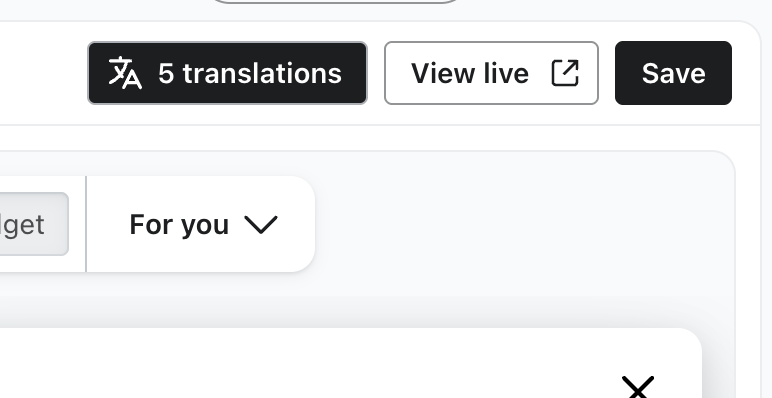
- Click Translate in the top bar. If you have already added languages, the button shows the number of translations.
- If this is your first time adding translations, select the language of your original content under Written in, choose your target languages under Translate to or Additional languages, select a Default language, then click Translate. Klaviyo generates translations for the selected languages.
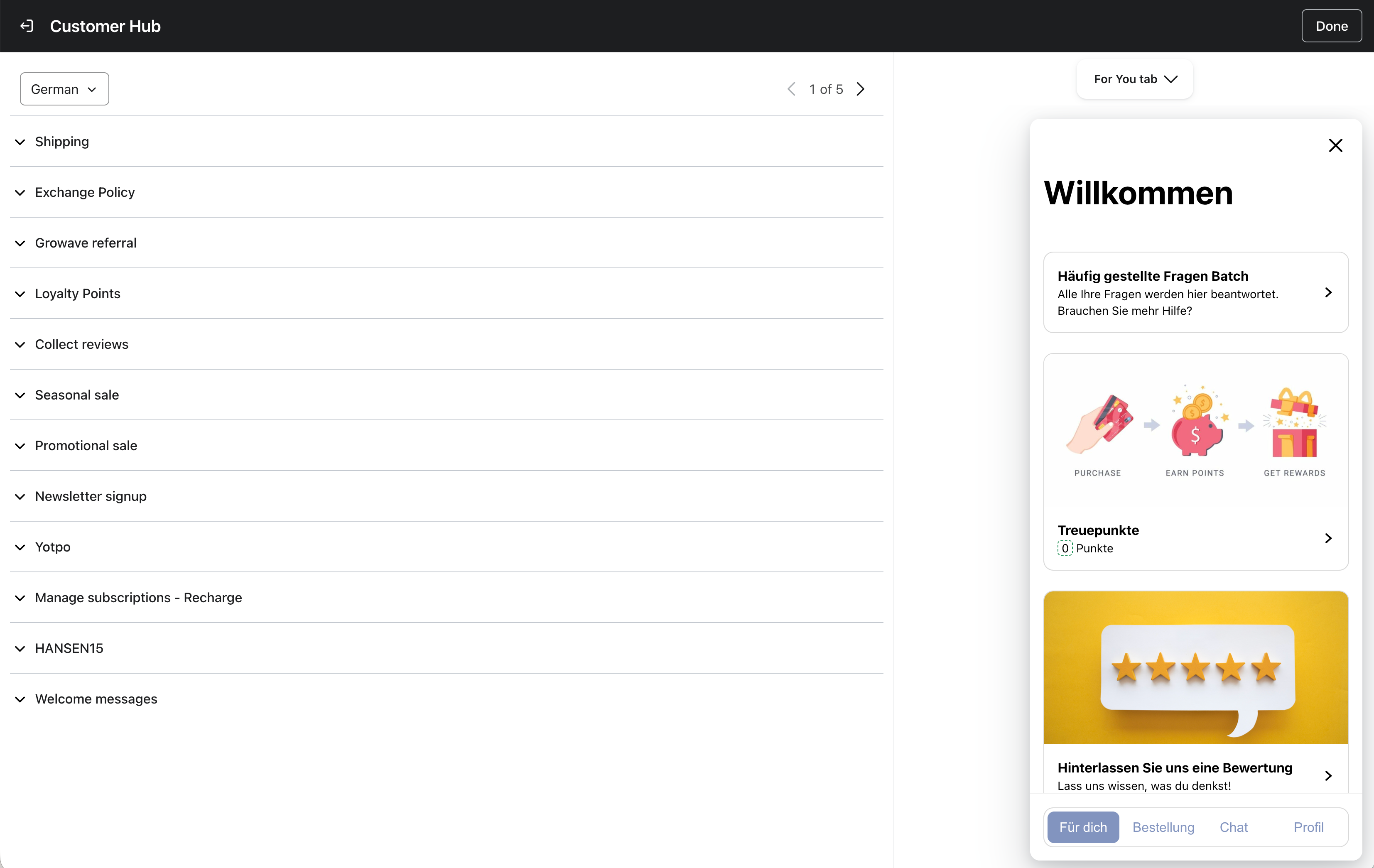
The translation editor lists the custom content you can edit.
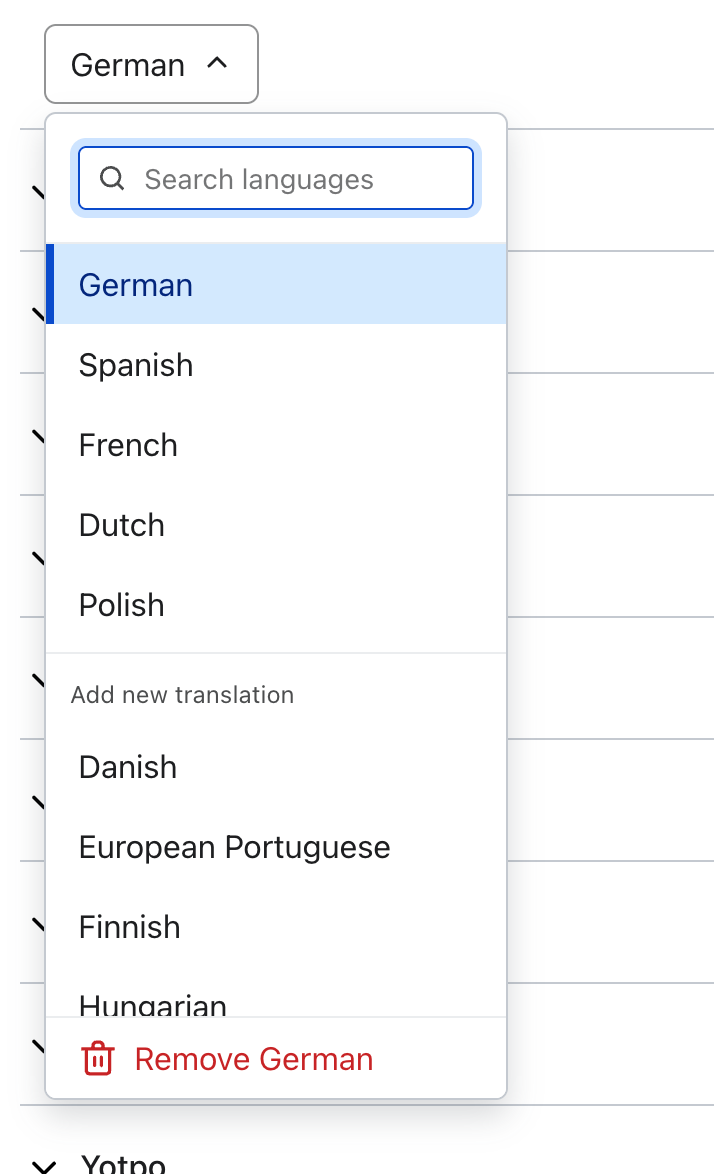
- Open the language you wish to edit (e.g., French) from the language selector or the translations overview. To add or remove languages, click Manage languages, update your selections, then click Save.
- Review and edit your text content. Click outside each edited field to save the change automatically.
- The left panel allows you to see a list of the text strings and edit them.
- The right canvas allows easy preview of each tab of Customer Hub in your selected language.
- Repeat this process for each language you added.
- Click Done to leave the translation editor.
Note: If no translated value is available for your custom content, Customer Hub displays the original custom text.
Managing translations when you update your text content
After you save changes to custom text that already has translations, Klaviyo flags translations that need updating. Review them manually or use AI to update them.
- Navigate to Customer Hub > Design, then click Edit your Hub.
- Click Review translations on the banner. If you see a translations overview, open a language that needs updating.

- Review the highlighted changes. Edit the translations manually, clicking outside each field to save, or click Update translations to generate AI translations for the changed content in the selected language.
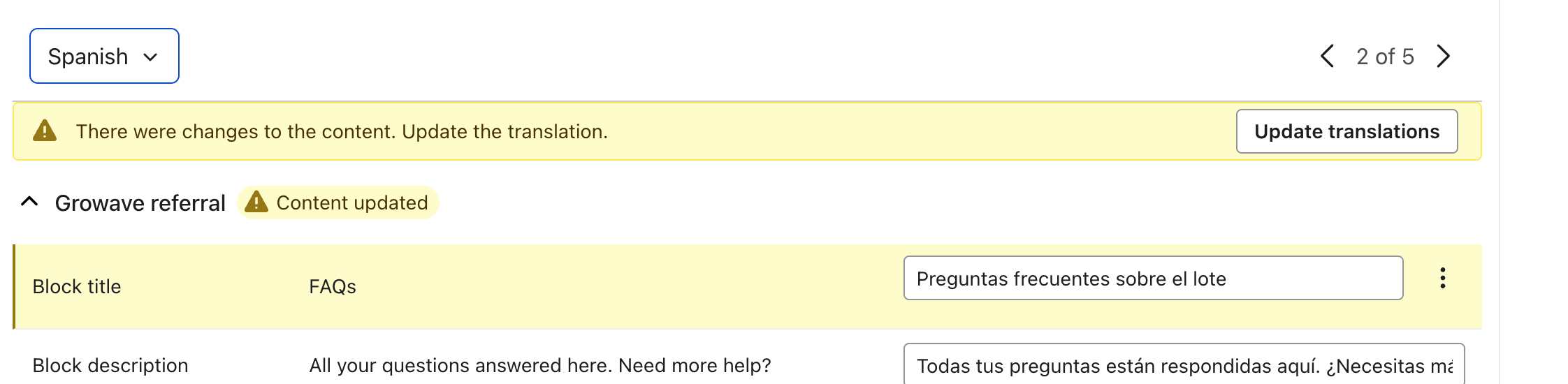
- After reviewing a language, click Review next language when it appears, or select another language from the language selector. Repeat for each language that needs updating.

- Click Done when you have finished reviewing your translations.
Admin vs. Customer view
Your experience inside Klaviyo (the Admin UI) is separate from what your customers see.
- Admin View: The Customer Hub admin UI follows your personal language settings in Klaviyo. If your personal language is set to English, the admin builder will remain in English.
- Customer View: The live Hub uses the storefront language and the custom translations described above.
Limitations
- Content Blocks: Translating your text does not automatically translate text embedded in images. Review images separately for each language.
Supported languages in the Klaviyo app
Within the Klaviyo app, Customer Hub supports the same languages as the rest of the Klaviyo platform. Learn how to change your personal language settings.