Quiet hours in campaigns
Before you begin, make sure SMS is enabled on your account, your campaign includes SMS, MMS or RCS content, and you're familiar with your account's SMS quiet-hours settings. For general quiet-hours concepts, see Understanding SMS and MMS quiet hours in flows.
What is quiet hours in campaigns?
Some regions have regulations that restrict the hours in the day during which you can send text messages, and sending during these windows can expose you to litigation. Quiet hours in campaigns automatically prevents your text message campaigns from sending to recipients during their quiet hours, and lets you choose whether an affected message should be delayed until quiet hours end or skipped entirely.
Klaviyo checks each recipient against quiet hours based on the send time of the individual message. Because of this, recipients in different locations can receive the same campaign at different times. Someone outside quiet hours gets the message right away, while someone inside quiet hours has it delayed or skipped based on the option you chose.
How to use quiet hours in campaigns
When you create a text message campaign, build your message and choose your audience as usual, then continue to the scheduling step.
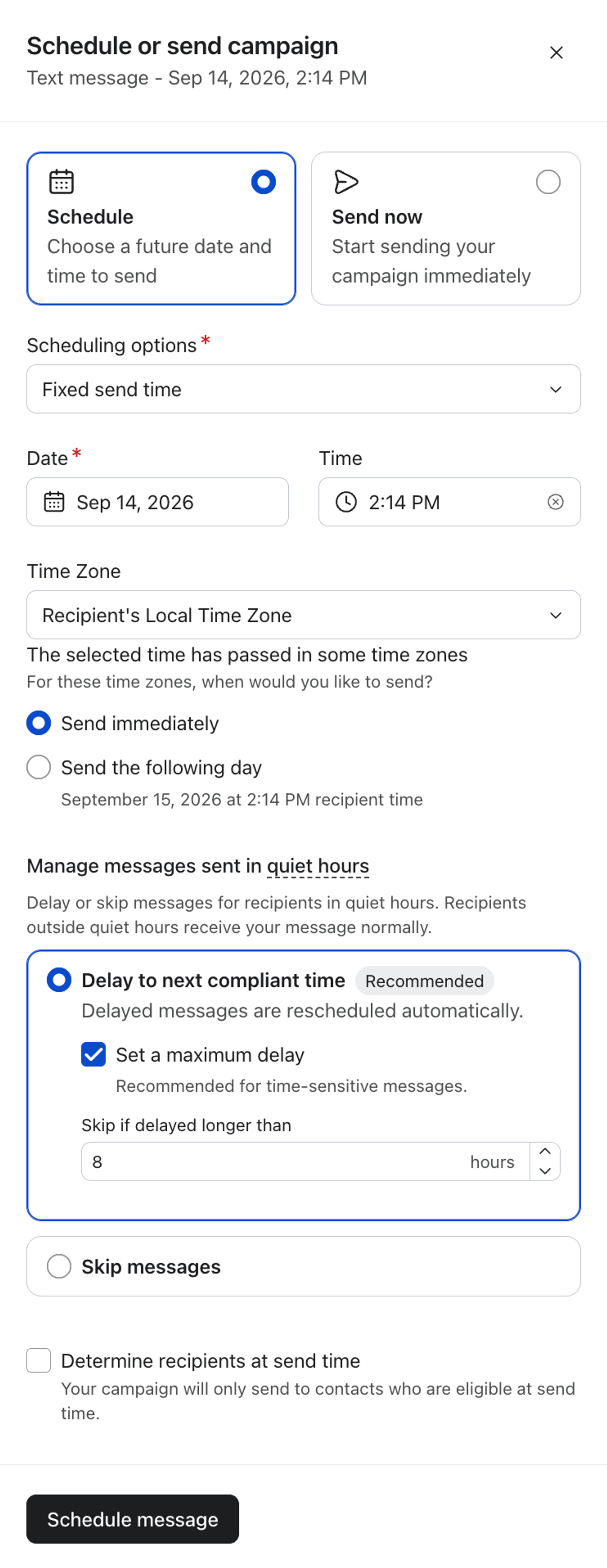
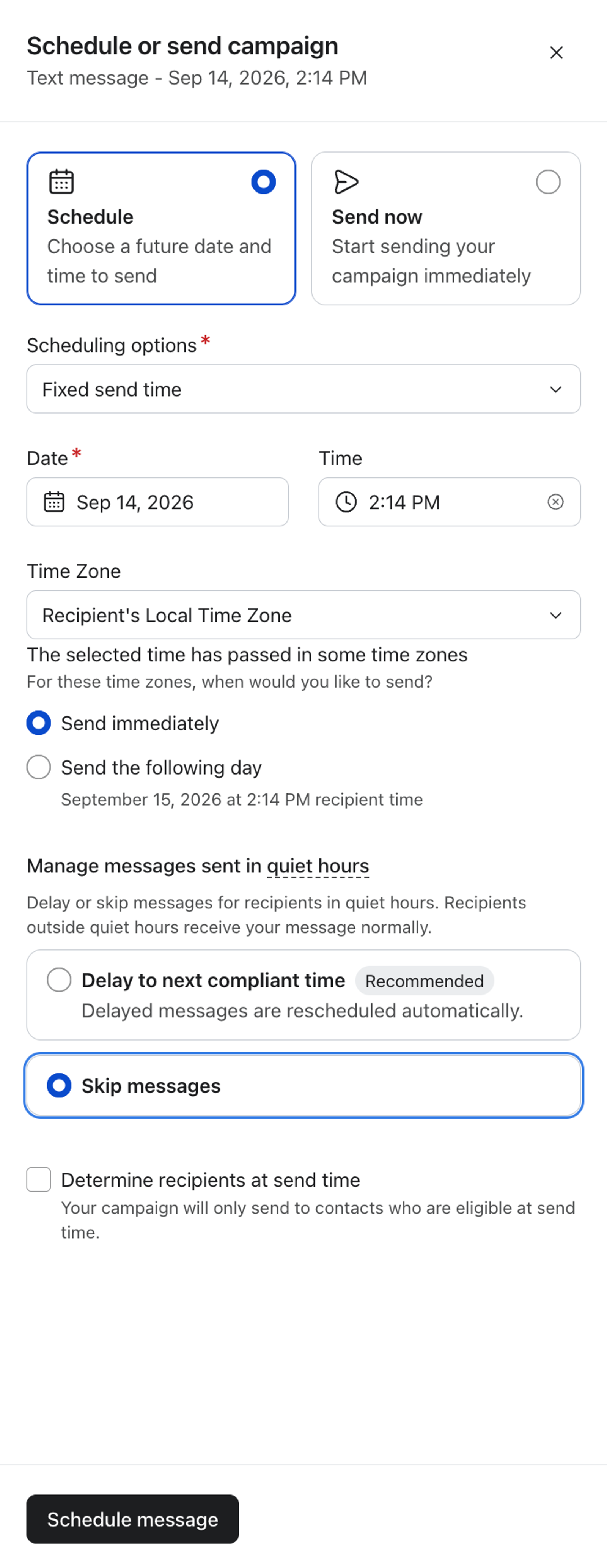
In the scheduling step, choose what happens if a message would land inside a recipient's quiet hours:
- Delay: hold the message until quiet hours end for the recipient. You can set a maximum delay, so a message that would wait too long gets skipped instead.
- Skip: don't send to that recipient at all.

Choose Delay when… | Choose Skip when… |
|---|---|
The message stays useful after quiet hours end. | The message would be stale after a long delay. |
A short compliance-related delay is acceptable. | The campaign is tied to a limited-time promotion or event, such as a flash sale, an expiring offer, or an event reminder. |
You want to reach affected recipients later. | You'd rather not send to recipients who can't receive the message promptly. |
After you have scheduled or sent the campaign, Klaviyo evaluates quiet hours individually for each recipient at send time. Messages outside quiet hours go out normally, and messages that fall inside quiet hours are delayed or skipped according to the setting you selected for the campaign.
Quiet hours evaluates each recipient based on the location and time zone stored on their Klaviyo profile. See Understanding when and how Klaviyo sets a profile's location for how profile location is generally set.
How delays and skips work
Delay
Delay holds the message until the recipient exits quiet hours, then sends it.
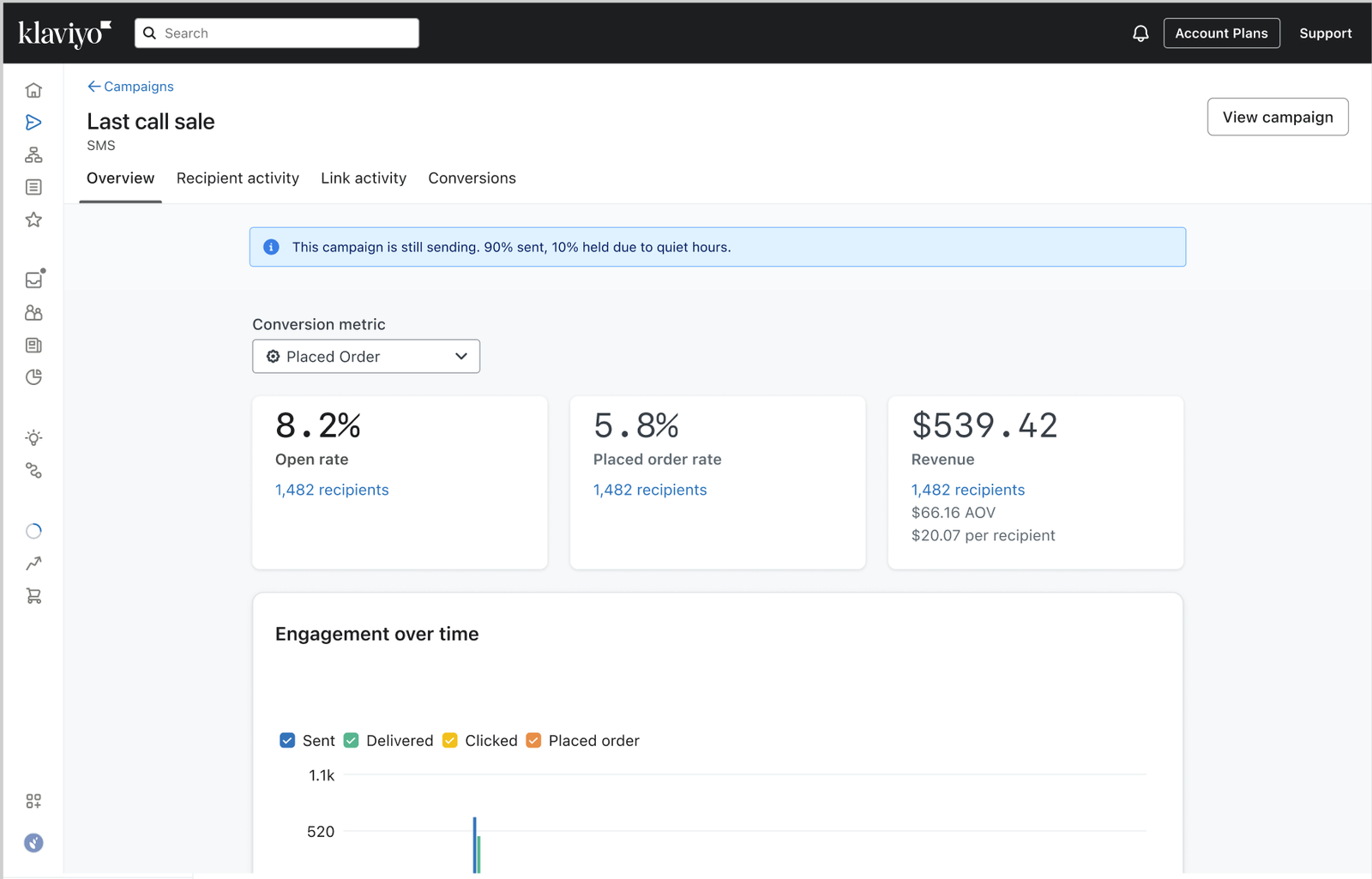
You can set a maximum delay threshold. If the next compliant send time falls beyond that threshold, the message is skipped instead of waiting indefinitely. A campaign shows a status of "Sent" once messages start delivering, even if some are still delayed by quiet hours. You can view the specific percentage breakdown of sent vs. delayed messages for that campaign on the Campaign Overview page.
For example: Your account’s quiet hours setting is 9pm to 8am. You send a campaign at 10:30 p.m. A recipient in New York is in quiet hours, so their message waits 9.5 hours and sends at 8 a.m. If your maximum delay is shorter than 9.5 hours, the message is skipped.
Where to see it:
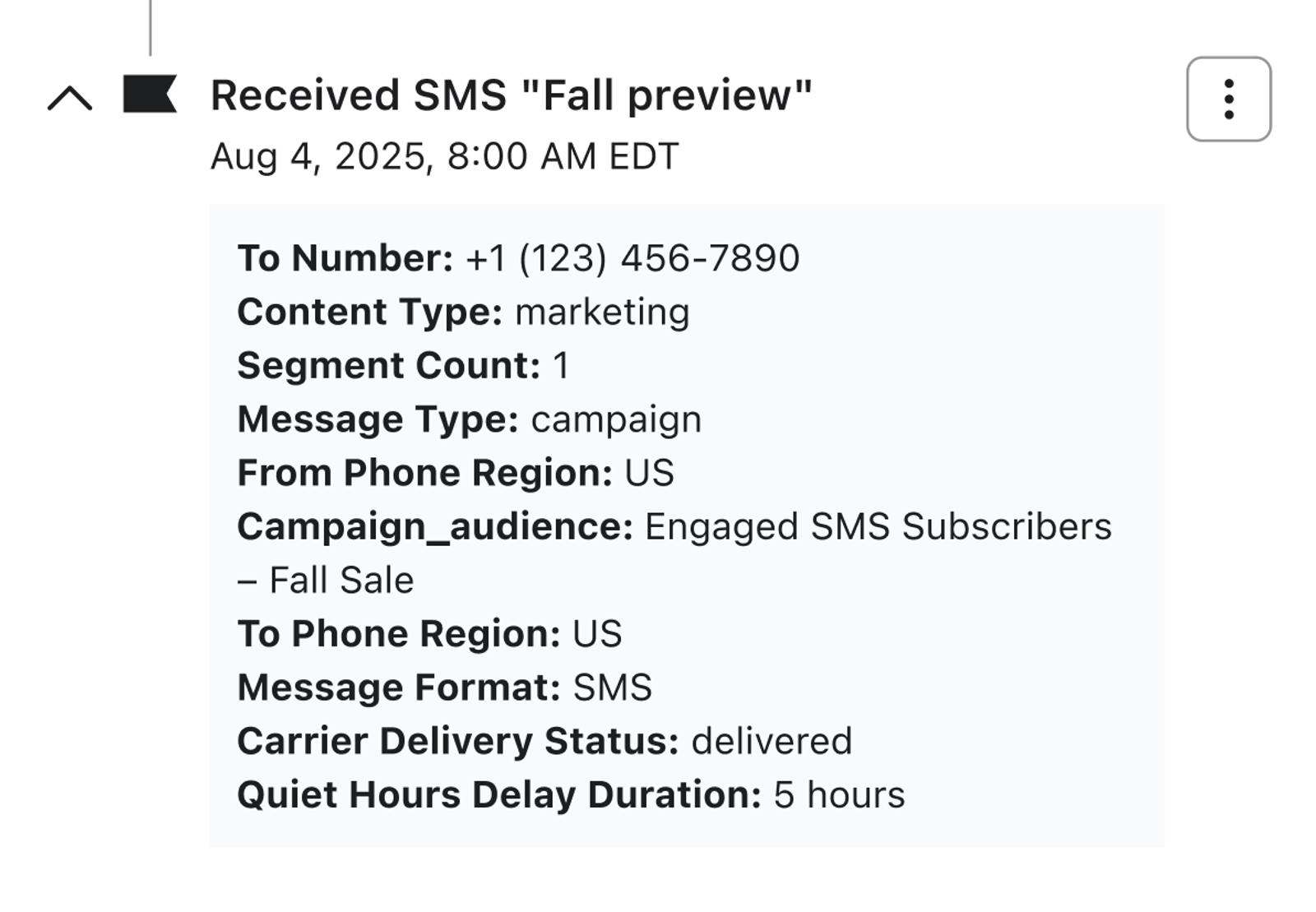
- Each delayed recipient's Received Text Message event includes a Quiet Hours Delay Duration field in their activity log.
Skip
Skips the message entirely if the intended send time lands within a recipient’s local quiet hours window. Skip should be used for time-sensitive campaigns, like flash sales, expiring offers, or event reminders, where a delayed message would arrive too late to be useful.
Where to see it:
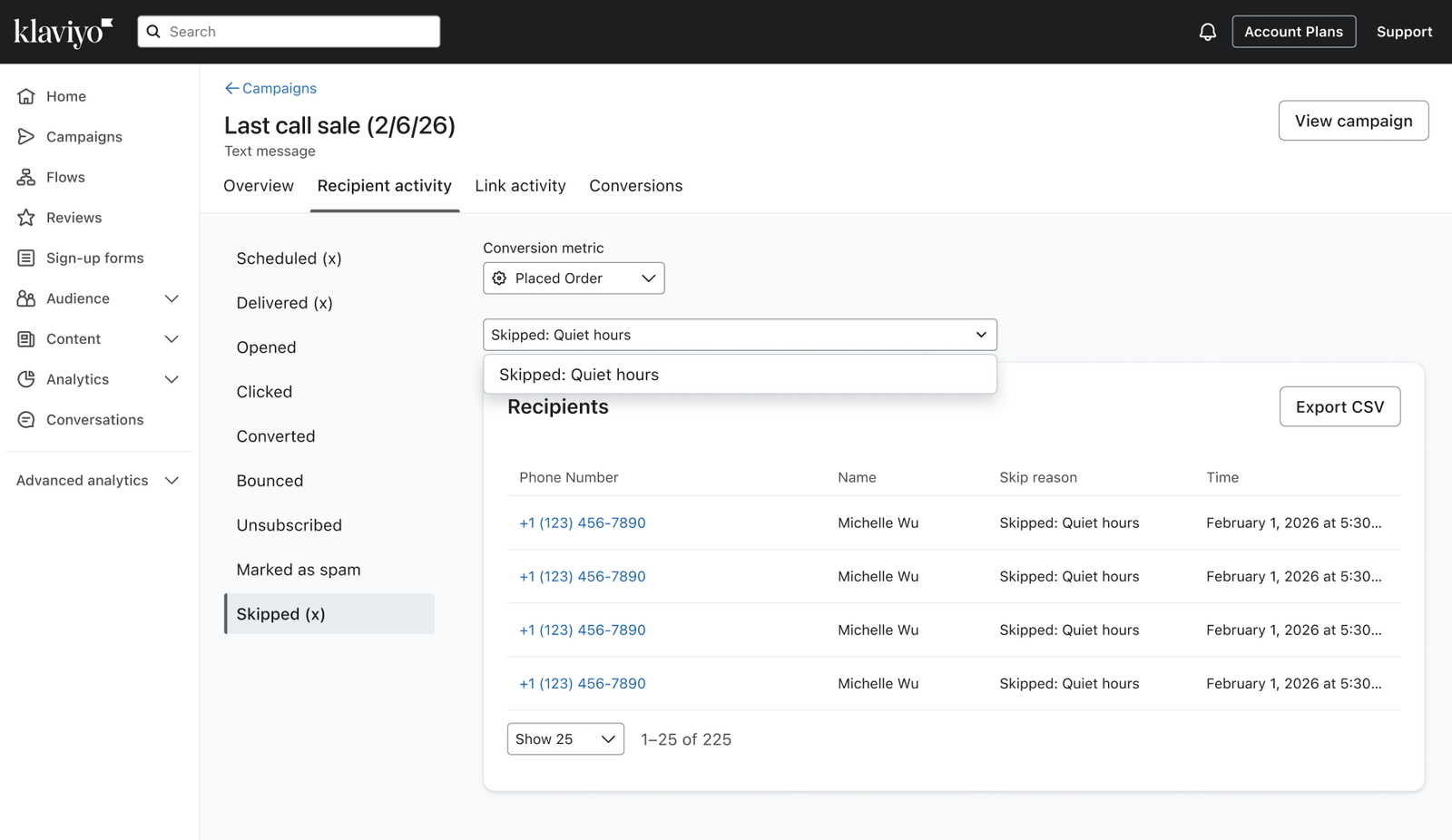
- Go to Campaign Overview > Recipient Activity > Skipped. Recipients skipped for quiet hours are marked Skipped: Quiet Hours.
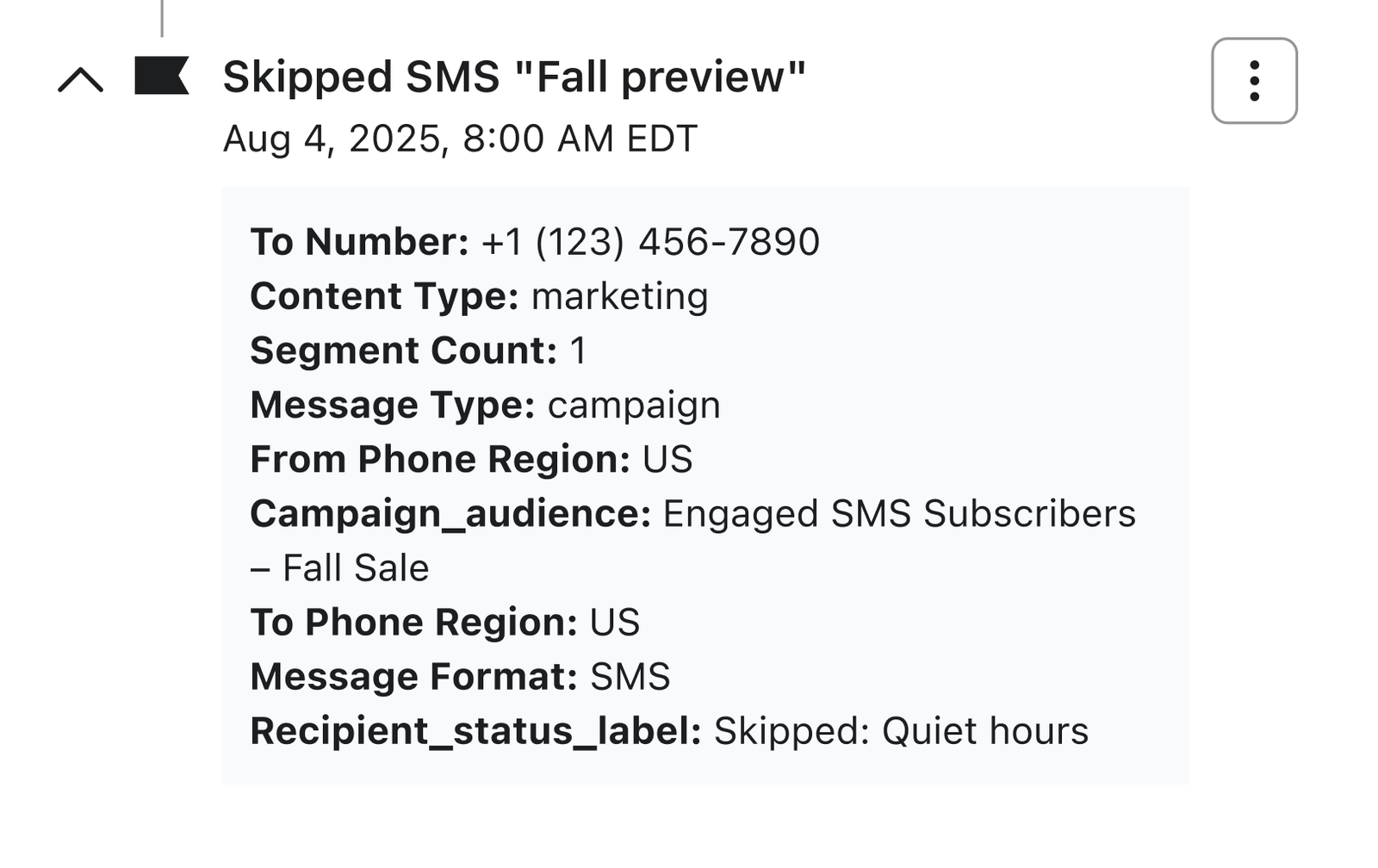
- A skip event is also posted to each skipped recipient's activity log.
Best practices
- Delay is the default. Choose Skip when a late delivery would reduce the message's relevance.
- Review your account's quiet-hours settings before launching a campaign.
- Give delayed messages time to complete before evaluating campaign performance.
- Use reporting to see how many recipients were delayed or skipped.
- Consult qualified legal counsel for questions about SMS sending requirements.