How to edit, turn off, or delete automations
You need permission to edit automations to complete these steps. Owners, Admins, and Managers have this permission.
You will learn
Learn how to update, turn off, or delete an existing automation in Klaviyo. You can edit or delete an automation whether it is turned on or off.
Turning off or deleting an active automation ends any conversations currently in progress. This also happens when you turn off an automation to edit it.
Before you begin
Please note that:
- You must turn off an automation before editing its messages, recommendations, or conversation paths. If it is already off, you can begin editing it.
- Deleting is permanent; you can’t recover deleted automations.
- Automation analytics cover the last 30 days, not the automation’s entire lifetime. Editing or turning off an automation does not start a new reporting period.
- Currently, there is no way to see the performance of a specific version of an automation.
Difference between turning off and deleting an automation
Turning off an automation stops new conversations from starting and ends conversations already in progress. It keeps the automation’s data, messages, and recommendations so you can edit it or turn it on again later.
Deleting an automation permanently removes it from your Automations page. You can no longer access its messages, recommendations, or analytics there. If you wanted to recreate it, you’d have to start from scratch.
Edit or turn off an automation
To either change or disable an automation:
- Navigate to Content > Automations and select the automation.
- If the automation is turned on, click Turn off in the upper right corner. If it is already off, skip to the editing step below.
- Confirming this action immediately ends conversations in progress. Customers do not receive a recommendation or fallback response when their conversation ends this way.
- Review the warning and click Turn off to confirm. If you only want to turn off the automation, stop here.
- To edit the automation, open the message, recommendation, or settings you want to change. Make your changes and click Save in the configuration panel. Repeat for each item you want to update. You can leave the automation off after saving.
- When you are ready for the automation to start triggering again, click Turn on. If an error appears, correct the issue described in the error message, save the affected item, and try again.
Delete an automation
You cannot recover an automation once it’s deleted or access its messages, recommendations, and analytics from the Automations page. If the automation is turned on, deleting it also ends any conversations currently in progress. Turn it off instead if you want to keep it for later use.
To delete an automation:
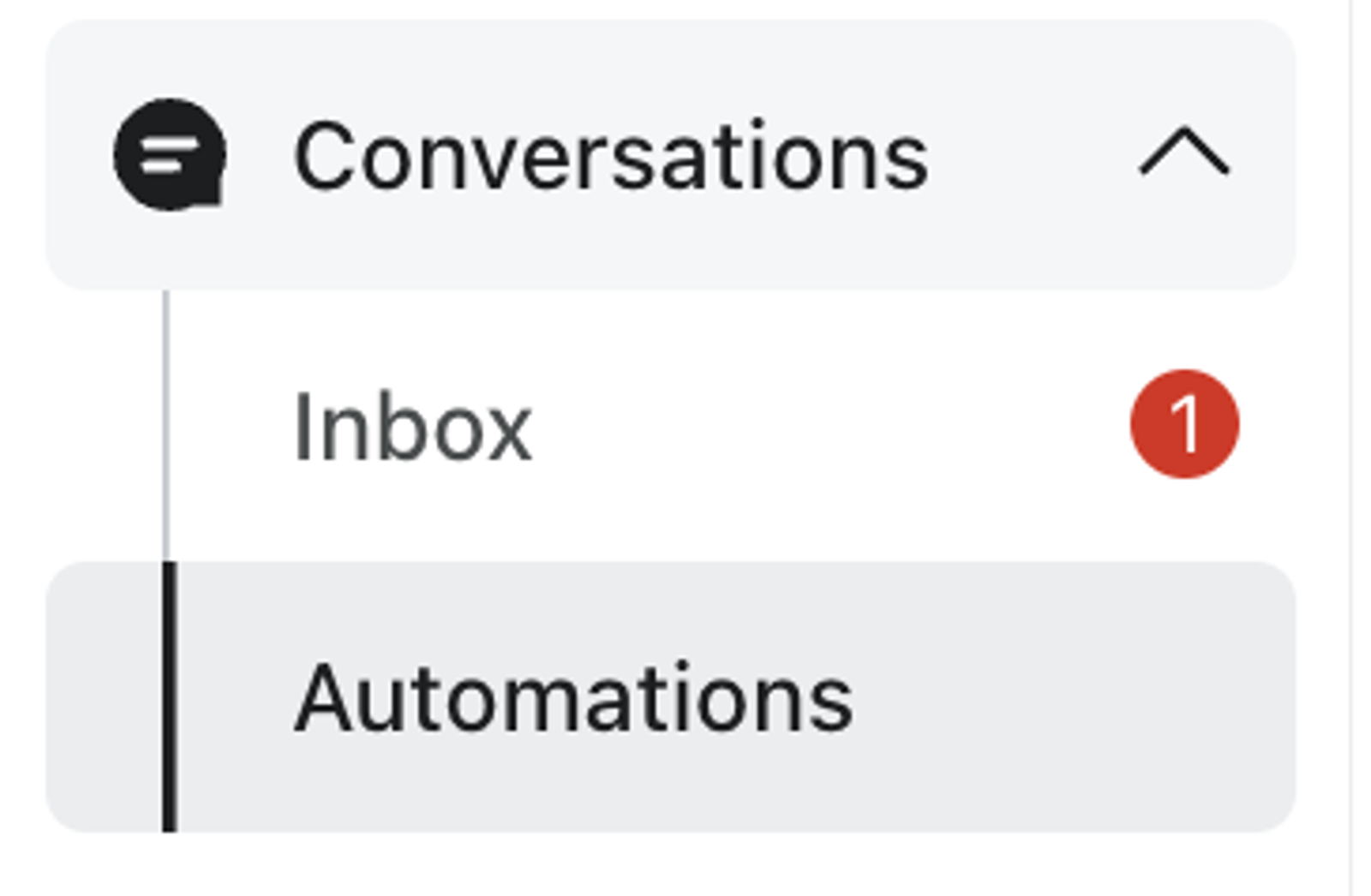
- Navigate to Content > Automations.
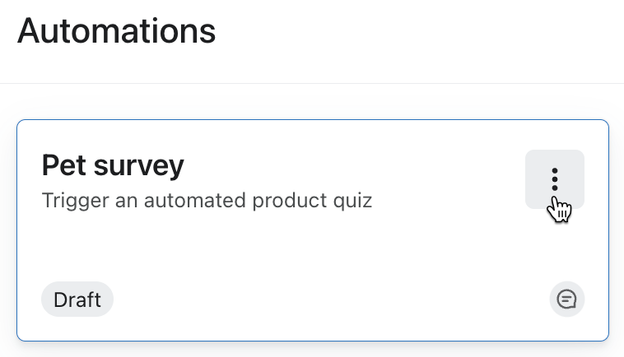
- Find the automation you want to delete.
- Click the 3-dot menu on that automation’s card.
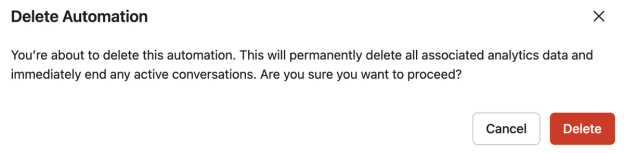
- Select Delete.
- Review the warning and click Delete to confirm.
Additional resources
- How to create a SMS and RCS automation
Learn how to build an automation, a type of text message conversation that allows you to ask questions, followup to responses, and send personalized recommendations. You can build two types of automations
- How to preview automations
Learn how to see how automation messages will appear to customers as well as how to test the entire automation without turning it on.
- How to view analytics for an automation
See how to check the performance of an automation, including how many people entered or completed it.