Creating a sending schedule based on email engagement reference
You will learn
Learn how to create a sending schedule based on customer engagement. This is key to achieving strong open rates and maintaining a positive relationship with your subscribers. Sending too often to unengaged profiles will hurt your sender reputation, whereas sending too infrequently to engaged customers is leaving money on the table. It's best to achieve a happy medium through the use of segments and sending schedules. In this article, you'll learn how to segment subscribers into engagement tracks that will inform your sending habits.
Apple Mail Privacy Protection (MPP) can record an open without the recipient reading your email. To exclude these automatic opens from your engagement tracks, add the filter Apple Privacy Open equals False to each Opened Email condition. Learn how to identify and exclude MPP opens in segments.
For complete information on MPP opens, visit our iOS 15: How to Prepare for Apple’s Changes guide.
Engagement tracks
Segmenting your subscribers into engagement tracks is a great way to avoid over-sending and prevent your emails from hitting the spam folder. We categorize these tracks based on how often you send to help you identify which course of action is best for your brand.
Choose the section that matches how often you usually email your most engaged subscribers. Build the tracks within that section as separate segments, then select the appropriate tracks for each campaign. The daily, weekly, and monthly sections are alternative examples; you do not need to build every set of tracks.
Once you establish your tracks, begin sending campaigns that are targeted and well suited for the segments' specific email habits. Select only the tracks due to receive each campaign, or send separate campaigns to each segment. Sending separate campaigns lets you compare the revenue attributed to each campaign and engagement track. Keep Smart Sending turned on to skip profiles who received another marketing email within your Smart Sending window. Smart Sending does not apply the different weekly or monthly schedules recommended for each track; you choose the audience and schedule for each campaign.
For example, if you normally send 3 times per week, you could include Track A on Monday, Wednesday, and Friday; Track B on Monday and Friday; and Track C on Friday. Keep Track D in a separate sunset or re-engagement process.
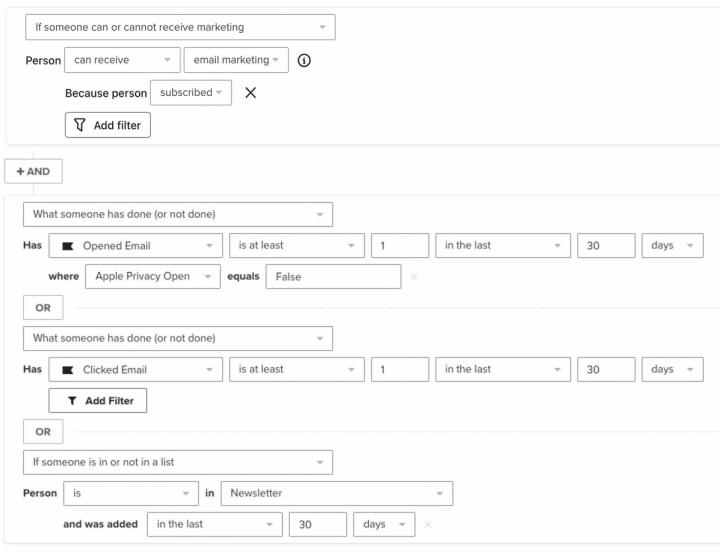
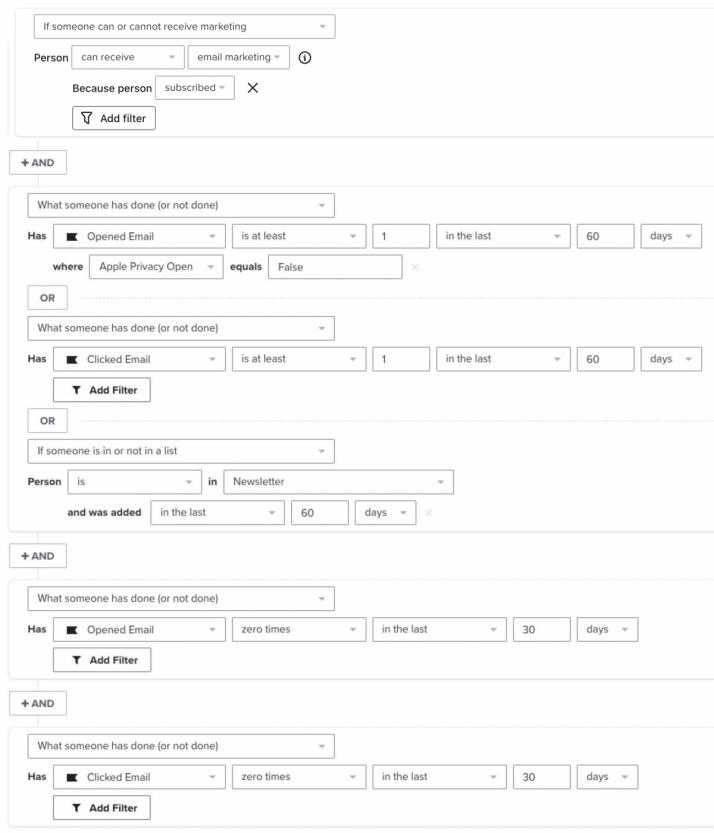
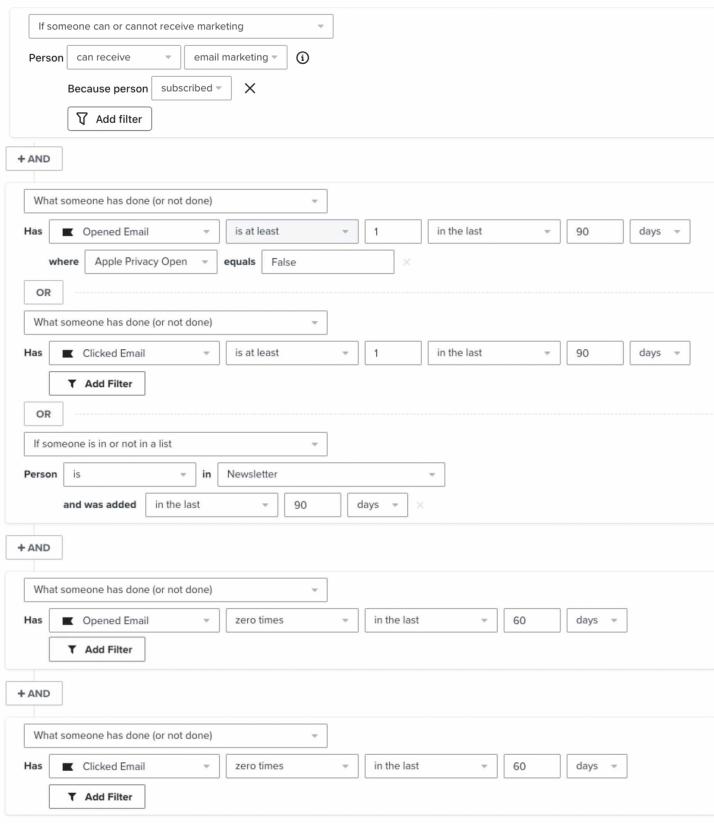
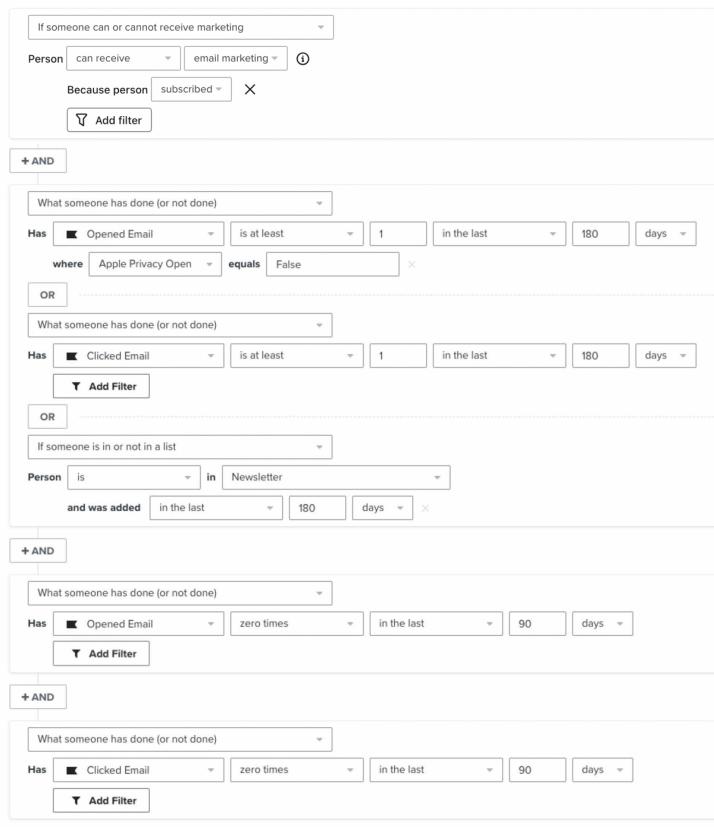
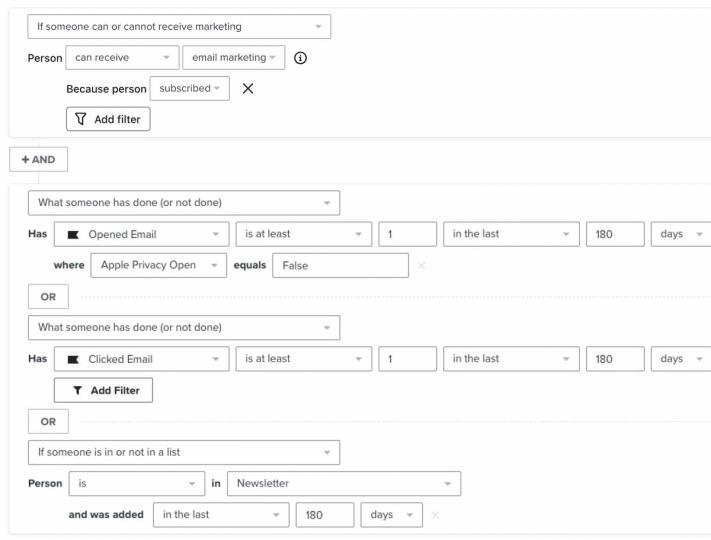
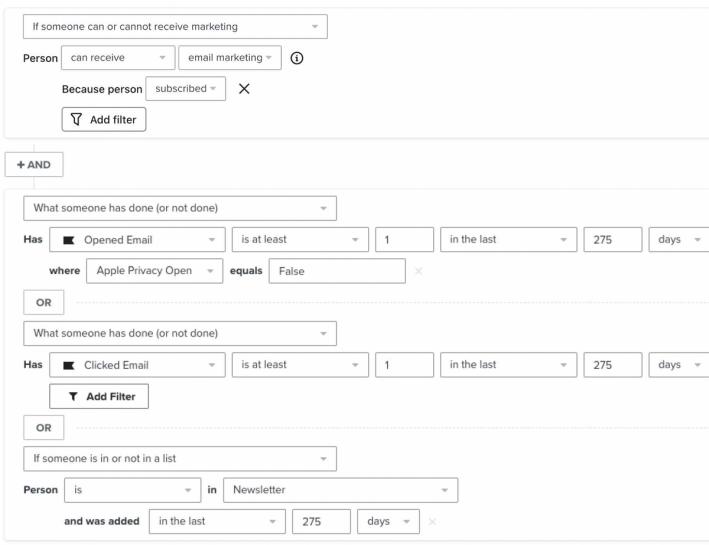
If you have multiple main lists, make sure those details are included in your engagement track segments with OR in the first block of conditions. Use the name of your main list rather than the sample provided here (e.g., Newsletter vs. Email List).
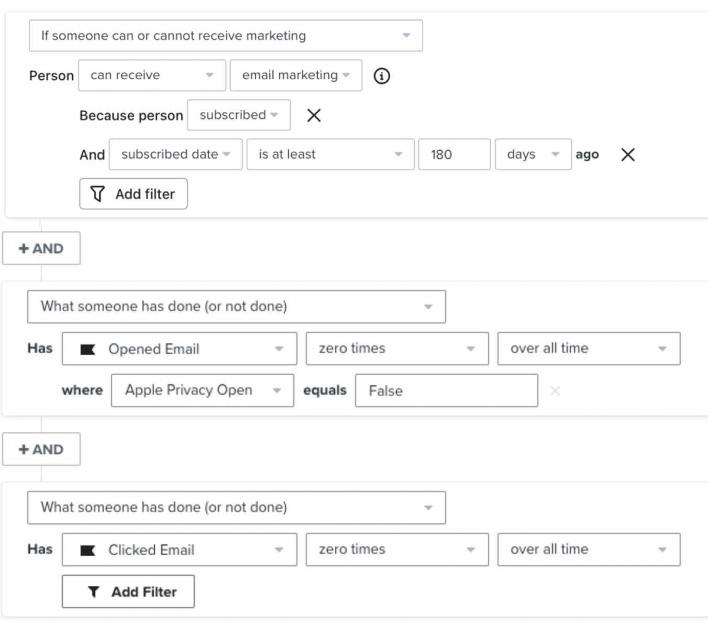
The final track in each example covers subscribers who have never opened or clicked an email. Also review subscribers who engaged in the past but have had no opens or clicks within your longest engagement window. Create a separate re-engagement segment for these subscribers so they do not fall outside your follow-up process.
If you send daily
For customers who receive emails daily, make your messages concise and to the point. Include as much targeted information as possible, as you want to engage them, while also not inundating them with any unnecessary or irrelevant material. Be cognizant that they are consistent recipients, so don't overload them with unnecessary information.
Track A
These subscribers are part of your main email list and have opened, clicked, or been added to the email list in the past 30 days.
Sending schedule: maintain a daily sending cadence with this segment.
Track B
This segment includes subscribers in your main email list that were added over 30 days ago. They have opened, clicked, or been added to your email list in the last 60 days, but haven't opened or clicked in the last 30 days.
Sending schedule: maintain a sending cadence of 3 times per week with this segment.
Track C
This segment includes individuals in your main email list that were added more than 60 days ago. They have opened, clicked, or been added to your email list in the last 90 days, but haven't opened or clicked in the last 60 days.
Sending schedule: maintain a sending cadence of 3 times per week with this segment.
Track D
This segment includes individuals in your main email list that were added more than 90 days ago. They have opened, clicked, or been added to your email list in the last 180 days, but haven't opened or clicked in the last 90 days.
Sending schedule: maintain a weekly sending cadence with this segment.
Track E
These subscribers are part of your main email list, were added more than 180 days ago, and have never opened or clicked an email.
You should create a sunset flow or re-engagement campaign to give these profiles some final opportunities to engage. If they do not engage with your re-engagement efforts, you should suppress the profiles in the segment.
If a profile in your main email list opens or clicks an email, they qualify for the 30-day engaged segment again. Suppressed profiles cannot receive marketing emails.
If you send 3 times per week
This group of recipients will receive your emails 3 times per week, so messages to them can include more information than those to daily senders, but you should still consider that they are consistent recipients. They likely want similar content to those who receive daily correspondence, but they prefer more of it at once rather than spread through each day of the week. Include plenty of targeted information to maintain their brand loyalty.
Track A
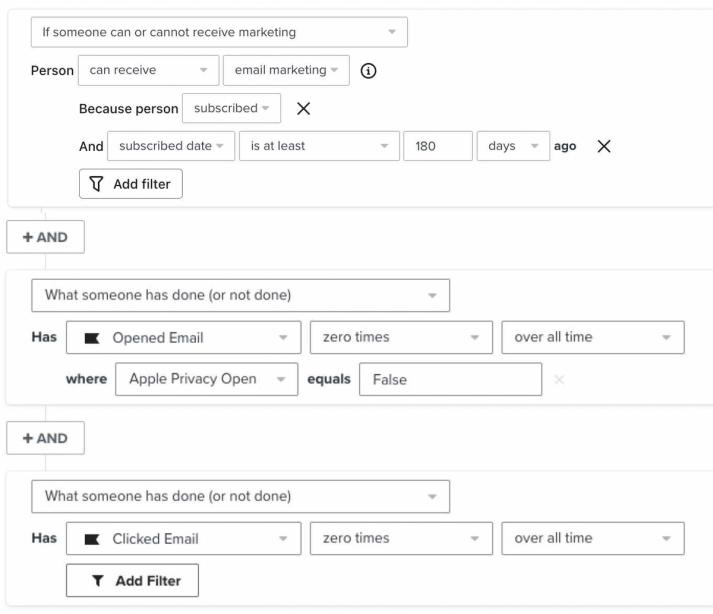
These subscribers are part of your main email list and have opened, clicked, or been added to the email list in the past 60 days.
Sending schedule: maintain a sending cadence of 3 times per week with this segment.
Track B
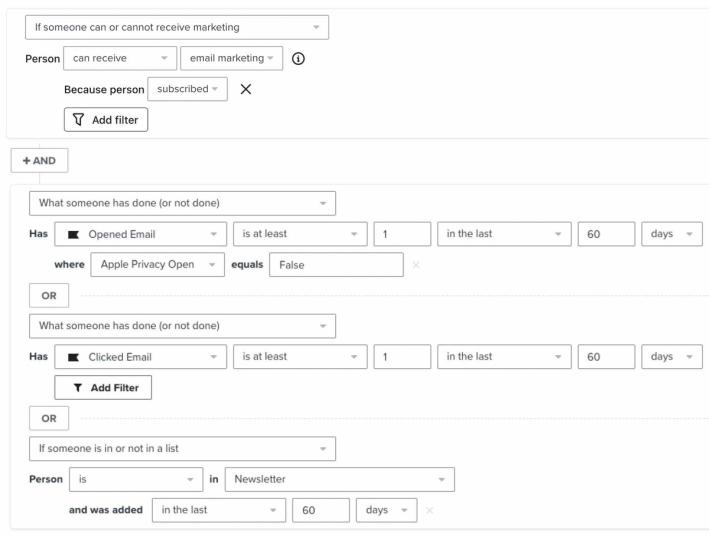
This segment includes individuals in your main email list that were added over 60 days ago. They have opened, clicked, or been added to your email list in the last 90 days, but haven't opened or clicked in the last 60 days.
Sending schedule: maintain a sending schedule of 2 times per week with this segment.
Track C
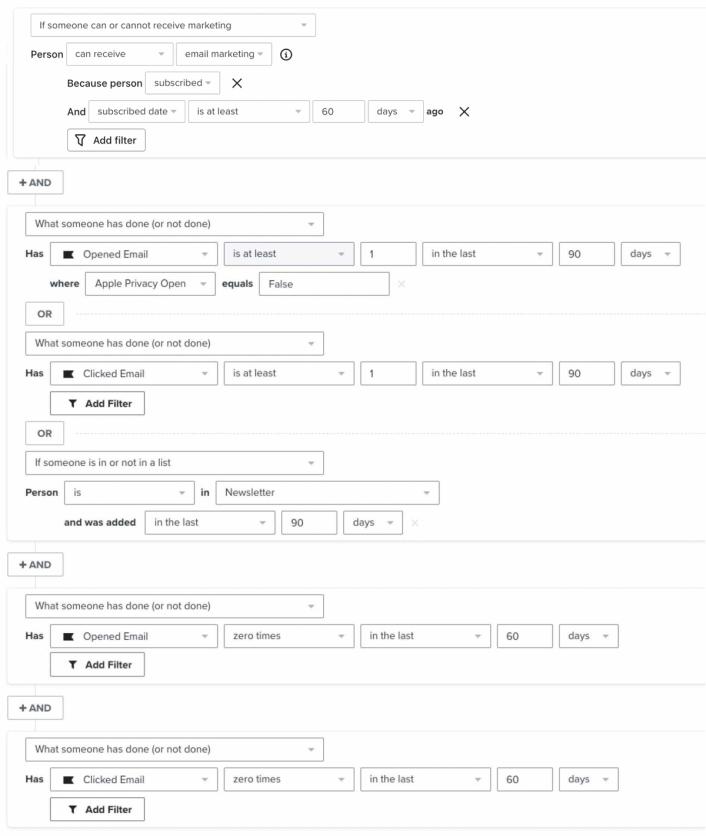
This segment includes individuals in your main email list that were added more than 90 days ago. They have opened, clicked, or been added to your email list in the last 180 days, but haven't opened or clicked in the last 90 days.
Sending schedule: maintain a weekly sending schedule with this segment.
Track D
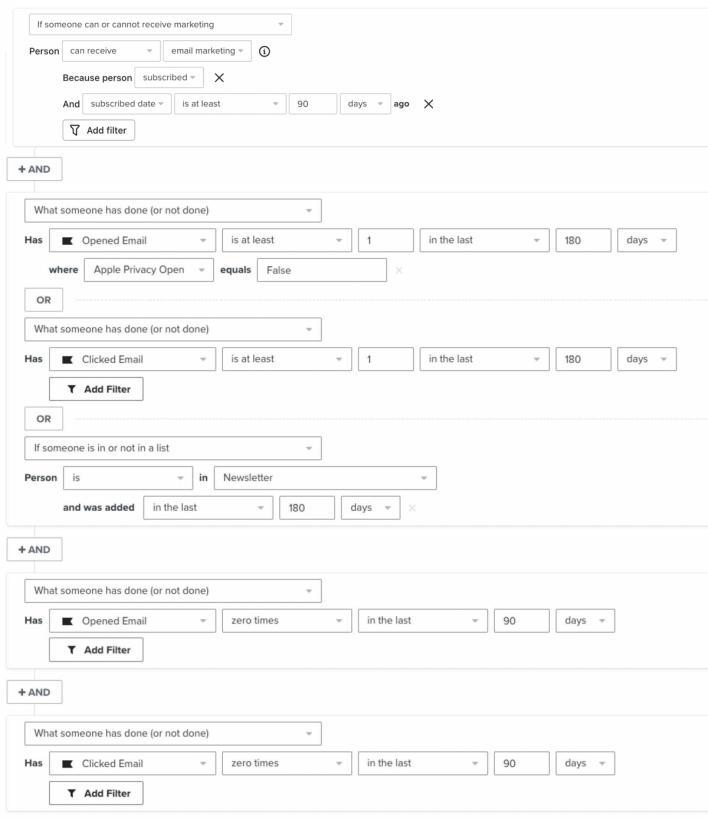
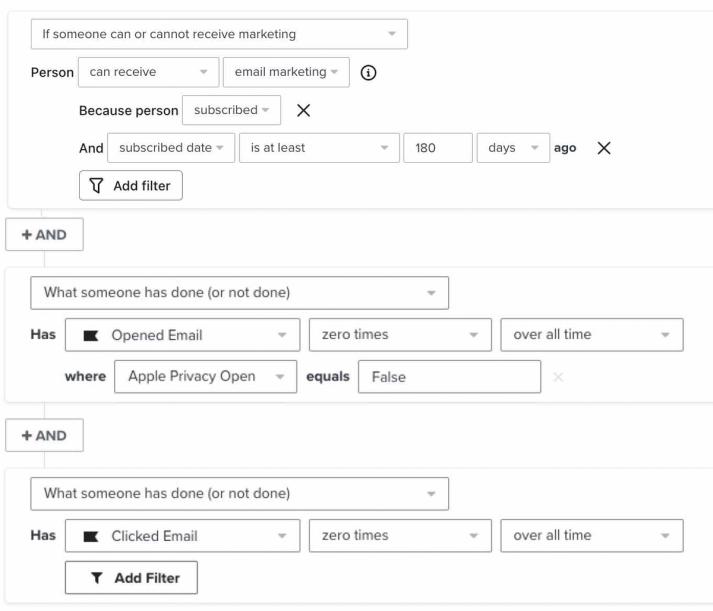
These subscribers are part of your main email list, were added more than 180 days ago, and have never opened or clicked an email.
You should create a sunset flow or re-engagement campaign to give these profiles some final opportunities to engage. If they do not engage with your re-engagement efforts, you should suppress the profiles in the segment.
If a profile in your main email list opens or clicks an email, they qualify for the 60-day engaged segment again. Suppressed profiles cannot receive marketing emails.
If you send 2 times per week
This group of recipients will receive your emails 2 times per week, so messages to them can include slightly more information than groups that receive sends more frequently. They should still be considered consistent recipients. These profiles likely want similar content to those who receive daily correspondence, but they prefer more of it at once rather than spread throughout the week. Include plenty of targeted information to maintain their brand loyalty.
Track A
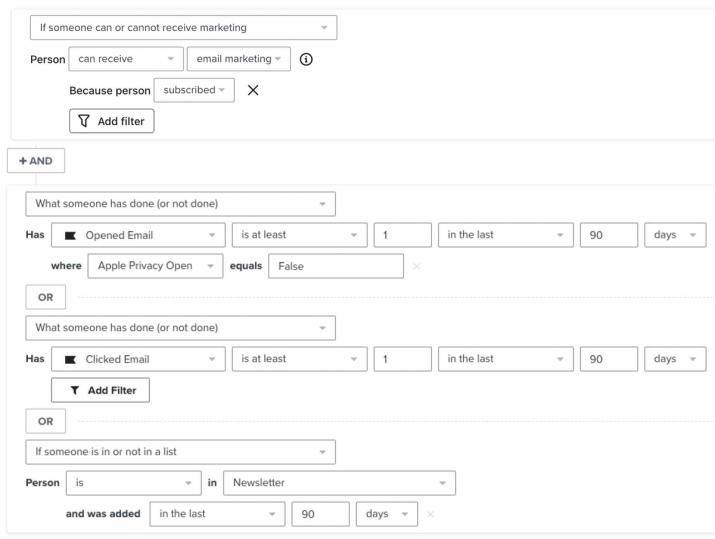
These subscribers are part of your main email list and have opened, clicked, or been added to the email list in the past 90 days.
Sending schedule: maintain a sending cadence of 2 times per week with this segment.
Track B
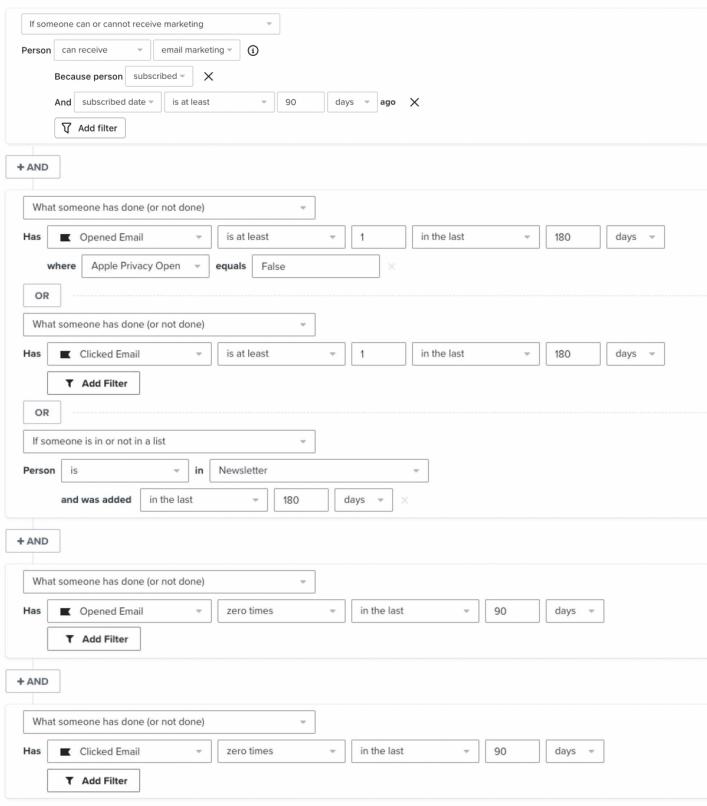
This segment includes subscribers in your main email list that were added over 90 days ago. They have opened, clicked, or been added to your email list in the last 180 days, but haven't opened or clicked in the last 90 days.
Sending schedule: maintain a weekly sending cadence with this segment.
Track C
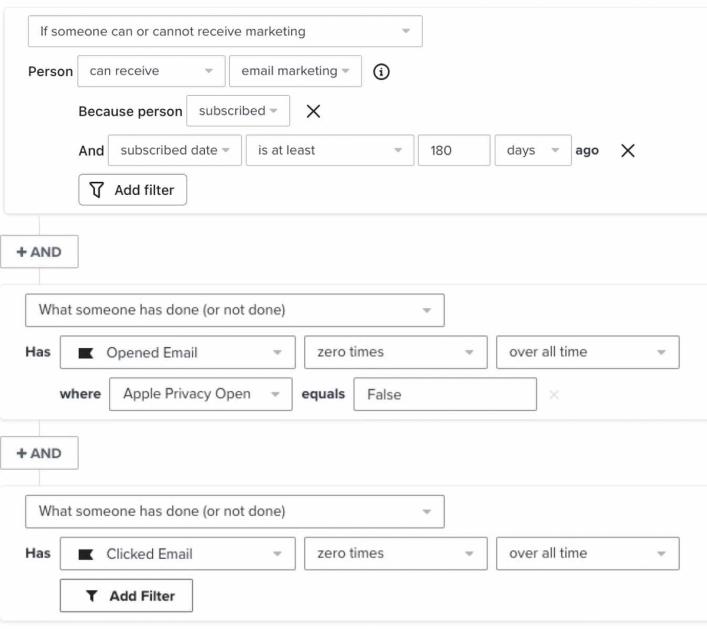
These subscribers are part of your main email list, were added more than 180 days ago, and have never opened or clicked an email.
You should create a sunset flow or re-engagement campaign to give these profiles some final opportunities to engage. If they do not engage with your re-engagement efforts, you should suppress the profiles in the segment.
If a profile in your main email list opens or clicks an email, they qualify for the 90-day engaged segment again. Suppressed profiles cannot receive marketing emails.
If you send weekly
This group of recipients will receive your emails weekly, so messages to them can include more information than those that receive emails multiple times throughout the week. They likely want similar information, but they prefer more of it at once. Include plenty of targeted information to maintain their brand loyalty.
Track A
These subscribers are part of your main email list and have opened, clicked, or been added to the email list in the past 180 days.
Sending schedule: maintain a weekly sending cadence with this segment.
Track B
These subscribers are part of your main email list, were added more than 180 days ago, and have never opened or clicked an email.
You should create a sunset flow or re-engagement campaign to give these profiles some final opportunities to engage. If they do not engage with your re-engagement efforts, you should suppress the profiles in the segment.
If a profile in your main email list opens or clicks an email, they qualify for the 180-day engaged segment again. Suppressed profiles cannot receive marketing emails.
If you send monthly
Since monthly senders do not have the same close cadence that weekly and daily senders have with your brand, it is likely that you will need to include more information in emails sent to these segments. Consider sending out a longer monthly digest with new products, deals, and promotions. Make this information as relevant as possible and include information that will jump out to subscribers to encourage continued engagement.
Track A
These subscribers are part of your main email list and have opened, clicked, or been added to the email list in the past 275 days.
Sending schedule: maintain a monthly sending cadence with this segment.
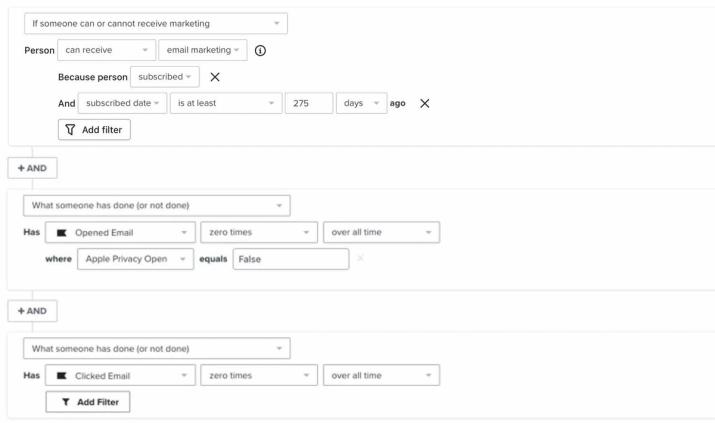
Track B
These subscribers are part of your main email list, were added more than 275 days ago, and have never opened or clicked an email.
You should create a sunset flow or re-engagement campaign to give these profiles some final opportunities to engage. If they do not engage with your re-engagement efforts, you should suppress the profiles in the segment.
If a profile in your main email list opens or clicks an email, they qualify for the 275-day engaged segment again. Suppressed profiles cannot receive marketing emails.
Visual example
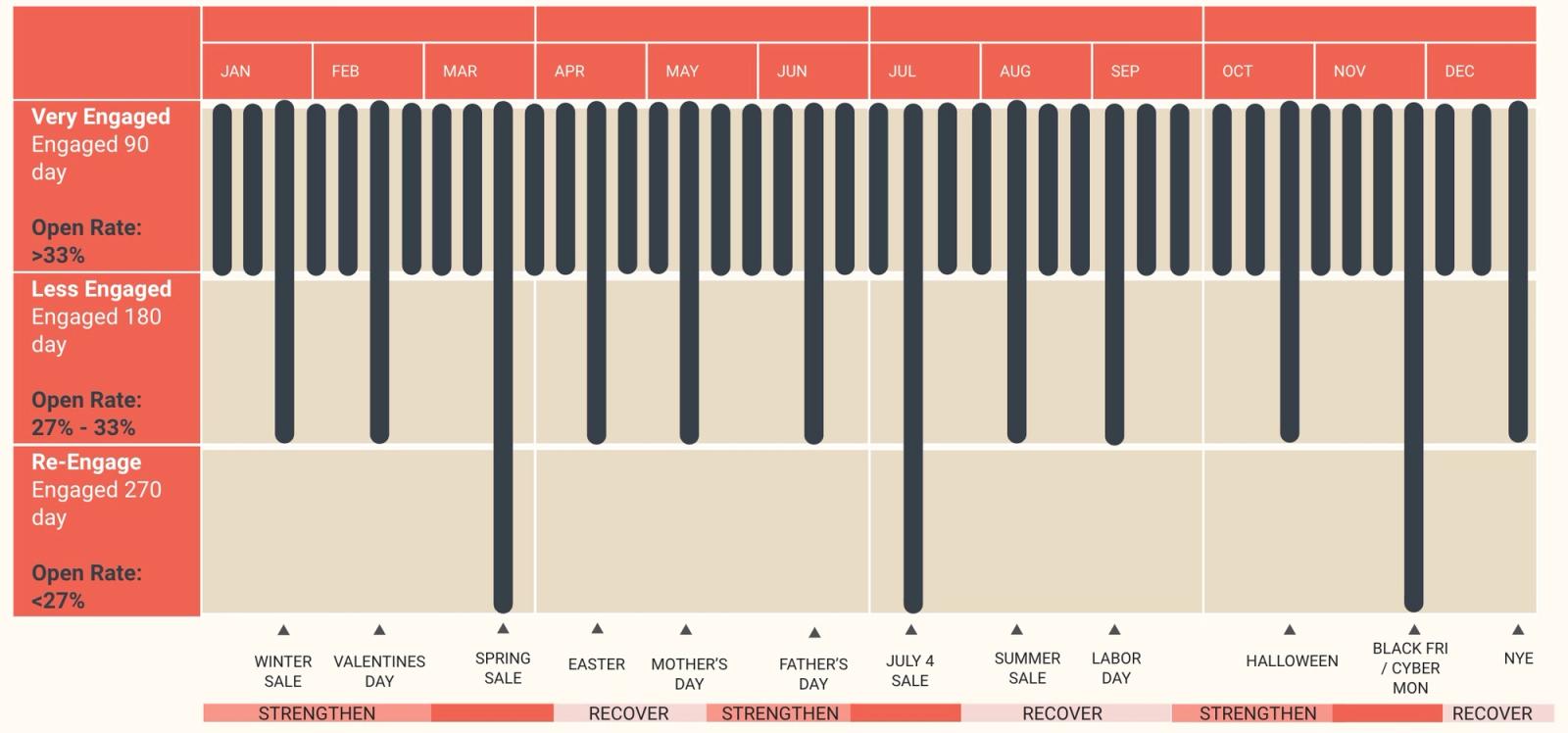
The graphic below shows an example of how to vary your sending cadence and volume over the course of a year. Send to Track A, which includes your most engaged subscribers, most often. Review engagement and deliverability before broadening your audience.
Around most holidays or company-wide sales, consider expanding beyond Track A to other engaged tracks. For your biggest sales, such as spring, 4th of July, or Black Friday/Cyber Monday, review recent engagement before broadening your audience. Keep the final track for your sending frequency in its separate sunset or re-engagement process.
Monitor your performance
Once you collect data from your engagement tracks, it's vital to analyze how your emails perform. With this information, you can adjust content accordingly and take note of what marketing techniques work with each segment of your customer base. If you don't keep track of your sending schedule outcomes, you risk upsetting customers and diminishing their levels of engagement, which is why it's important to continuously monitor how campaigns perform over time.
Monitor opens and clicks alongside bounces, unsubscribes, and spam complaints over time. If opens or clicks decline, or negative engagement rises, tighten your engagement criteria or adjust your email content and sending frequency. Use the current performance targets in our guide to monitoring deliverability. Account for Apple Privacy opens when interpreting open rates. You can also monitor open rates over time by engagement track with our campaign trends report.
You can monitor your daily performance using the overview dashboard. Here, you can create cards with information and metrics that directly pertain to your business and what metrics you're interested in tracking. Otherwise, use our custom report builder to tailor a campaign performance report to your needs or view your benchmark performance.
Additional resources
- Advanced segmentation reference
Learn effective advanced segmentation strategies that provide insights into your customer base and create highly personalized experiences for your subscribers.
- How to build a campaign performance report
Learn more about the campaign performance report, where to find it in Klaviyo, and how to customize it to better serve your business. The campaign performance report lets you deep dive into campaign-specific engagement and conversion data. This reports helps you get up and running quickly by providing a pre-made report that includes all standard engagement and deliverability metrics neatly grouped by campaign name. Tailor it to your needs by customizing the metrics you want to analyze and focusing that analysis using tags and time range filters.
- Developing a content calendar