Understanding the subscribed to list metric
You will learn
Learn about the Subscribed to List metric, which appears on a customer’s profile whenever they subscribe to a list in Klaviyo. This includes:
- When someone subscribes through a Klaviyo sign-up form connected to a list. If the list uses double opt-in, they must also confirm their subscription.
- When a profile is added to a list with email consent using Add profile.
- When a profile is added to a list with email consent via CSV upload.
- When someone subscribes through a Klaviyo-built integration, or certain third-party integrations.
Because of this, it is crucial to understand best practices around using it for creating segments. In this article, you will learn what the Subscribed to List metric entails and when to use it.
The subscribed to list metric
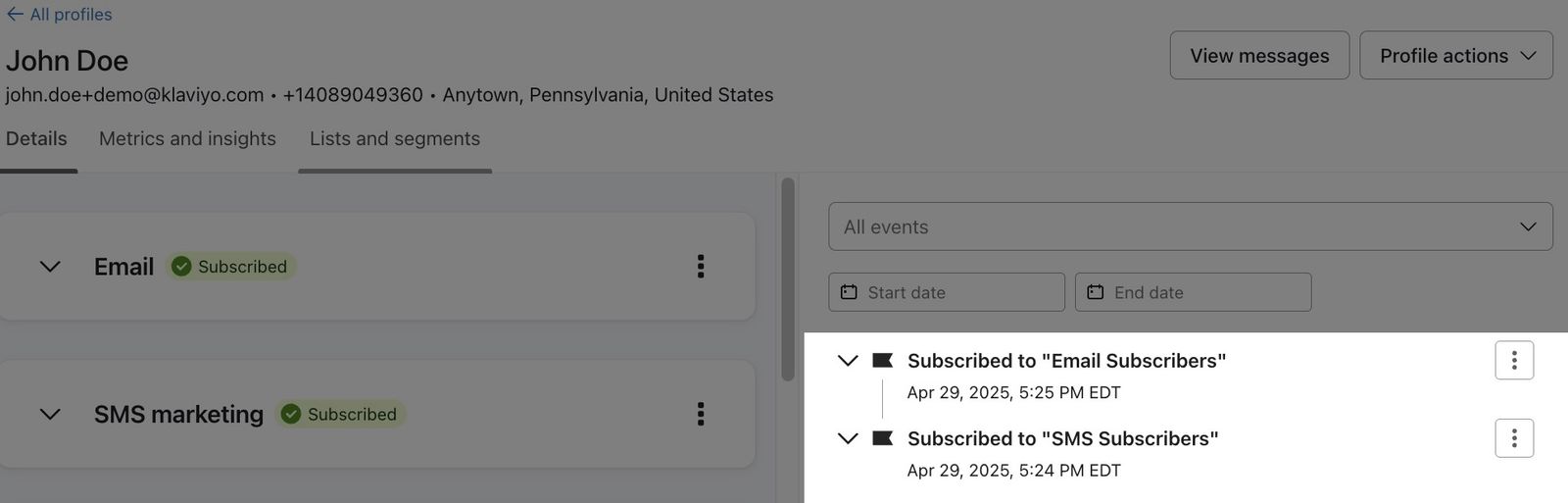
The Subscribed to List metric appears on a customer’s profile when they subscribe to one of your lists. Below is an example of what this metric will look like in a profile.
For SMS subscriptions, Klaviyo can record multiple Subscribed to List events for the same profile and list.
If someone is already subscribed to email, is not suppressed, and is on the list, submitting the same form again will not create another Subscribed to List event or add them to the list again.
For email subscriptions, Klaviyo can record a Subscribed to List event when someone subscribes and is:
- Not in the list
- In the list, but suppressed
- In the list, but has not previously given email consent
When the subscribed to list metric is added to a profile
A Subscribed to List event can also record a resubscription, so it does not necessarily mark the first time someone joined the list. When an import records a subscription with a past consent date, the event uses that date.
To learn more about subscribers syncing from Shopify, check out How to sync Shopify email subscribers to a Klaviyo list.
When to use in a flow
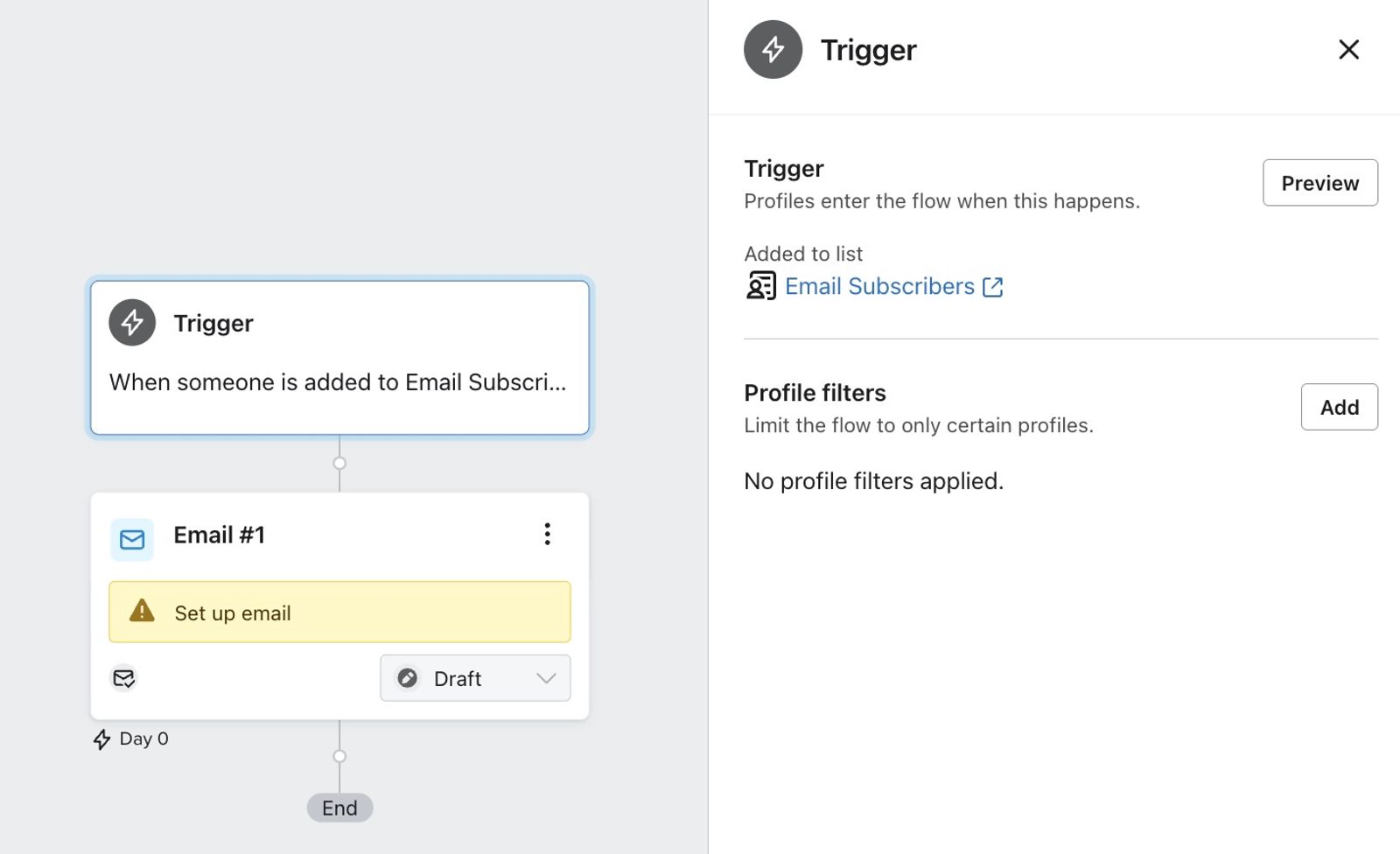
In general, using the Subscribed to List metric to trigger your flow is not a best practice. Instead, if you want customers in a specific list to go through your flow when added, create a list-triggered flow.
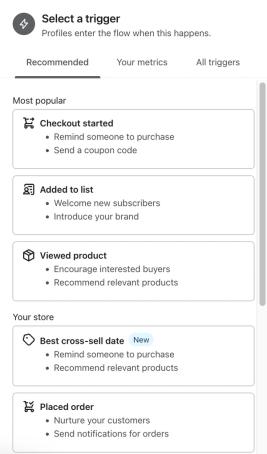
If you do use this metric to trigger your flow, be sure to add a trigger filter identifying the specific list you are referring to with the Subscribed to List metric. For example, this trigger filter is: List equals Product Review List.
When to use in a segment
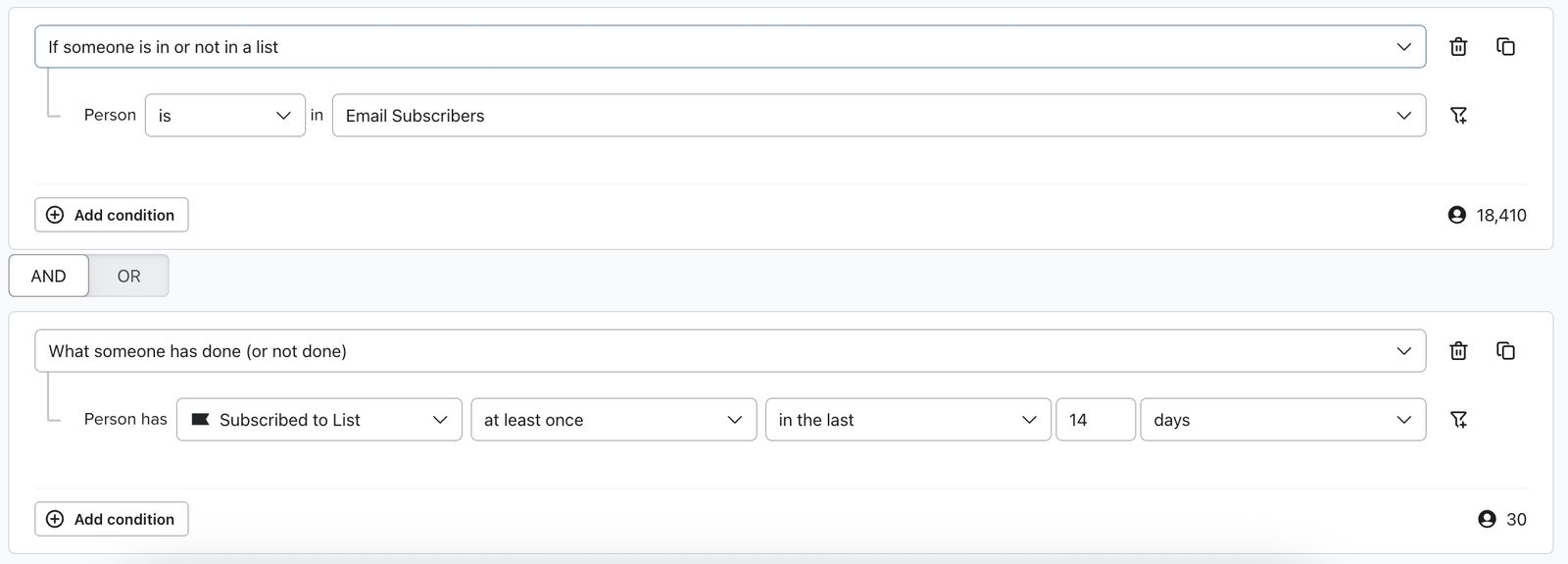
Use the Subscribed to List metric when building a segment if you want to view how many people subscribed to a list. For example, to find current list members who subscribed in the last 2 weeks, use both conditions below and select the same list in each. This can include people who resubscribed.
- If someone is in or not in a list > Person is in [List name]
AND - What someone has done (or not done) > Person has Subscribed to List at least once in the last 14 days > where List equals [List name]
Additional resources
- How to manage your sign-up forms
Learn tips for managing your existing sign-up forms so you can ensure they are aesthetically pleasing and functional for customers interested in engaging with your brand.
- How to create an email welcome series
Learn how to create a sequence of emails sent directly after someone subscribes to hear from your brand. This is a critical moment in the customer lifecycle because it's your opportunity to introduce new, interested prospects to your business and product offering. With a welcome series, you should capitalize on this display of interest.
- Understanding flow triggers and filters
Learn more about Klaviyo filters which can be used to further narrow triggers or actions in flows. For example, if a flow triggers when someone places an order, a trigger filter could be added to limit this to specific product types. Trigger filters are evaluated alongside the trigger itself to only let certain people into a flow.
- Email metrics reference
Learn more about what specific metrics in Klaviyo are associated with your customers' interactions with your emails. Understanding the metrics in your account is crucial to gaining insight into how your marketing initiatives are performing.