Come calcolare il tasso di fidelizzazione
Cosa imparerai
I calcoli del tasso di fidelizzazione offrono approfondimenti utili su quanto è fedele la tua base clienti e su dove potresti dover migliorare per aumentare il comportamento d'acquisto. Il tasso di fidelizzazione va oltre l'individuare chi sono i tuoi clienti più recenti; infatti, tiene conto degli acquisti in un intervallo di tempo definito per valutare il comportamento a lungo termine della clientela.
Calcola il tasso di fidelizzazione
Ci sono 3 passaggi che devi seguire per calcolare il tasso di fidelizzazione.
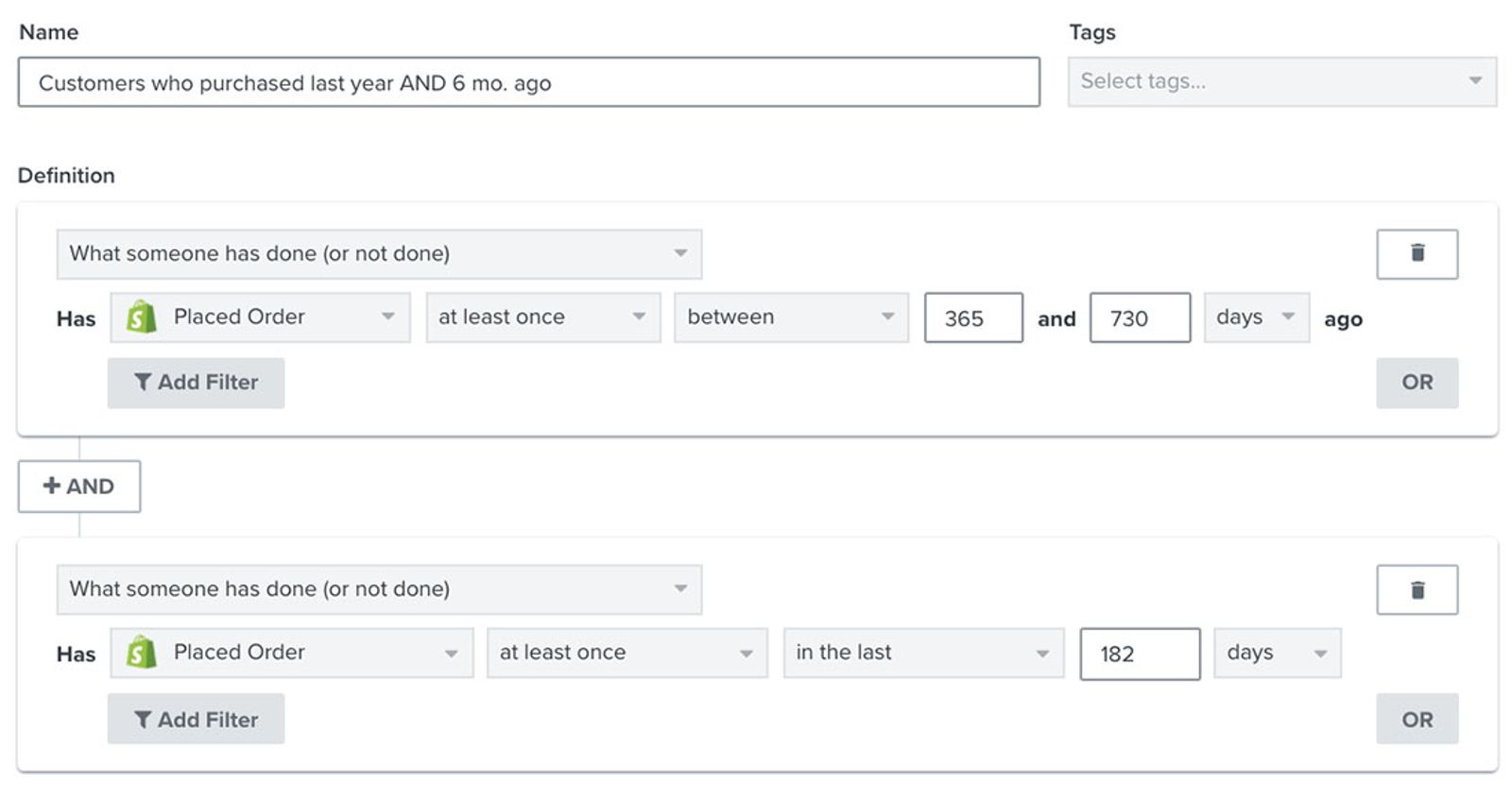
- Crea un segmento di clienti che hanno acquistato l'anno scorso E negli ultimi 6 mesi
- Crea un segmento di clienti che hanno acquistato dal tuo negozio l'anno scorso
- Calcola
Tieni presente che puoi creare un intervallo di tempo personalizzato se quello sopra non funziona per il tuo modello di business. Ad esempio, se hai un'attività basata su abbonamenti, puoi adattarti a questa tempistica nel modo più sensato per le tempistiche di acquisto della tua clientela.
1. Crea un segmento di clienti che hanno acquistato dal tuo negozio l'anno scorso (tra 365 e 730 giorni fa) e che hanno anche acquistato di recente (ad es. negli ultimi 6 mesi). Si tratta di clienti abituali dell'ultimo anno. Un esempio di questo segmento è mostrato di seguito.
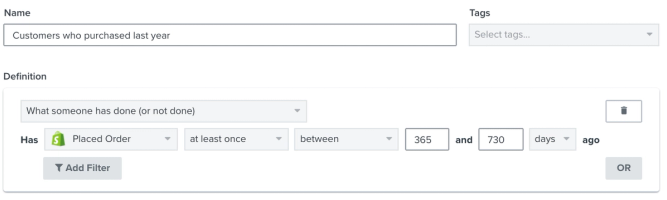
3. Ora che hai preparato i due segmenti, puoi iniziare a calcolare il tasso di fidelizzazione. Usa la formula qui sotto per il tasso di fidelizzazione:
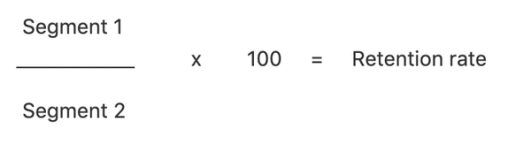
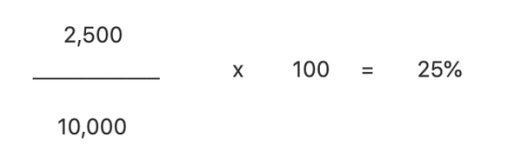
Ad esempio, se il tuo primo segmento (tra quelli che hanno effettuato acquisti lo scorso anno e negli ultimi sei mesi) include 2.500 profili e il numero totale di profili che hanno effettuato acquisti lo scorso anno era 10.000. La tua equazione sarebbe la seguente:
Risorse aggiuntive
- Come calcolare il valore medio dell'ordine (AOV)
Scopri come calcolare il valore medio dell'ordine (AOV) o il valore monetario totale delle tue conversioni (ordini) diviso per il numero di conversioni (ordini effettuati). Calcolare il valore medio dell'ordine (AOV) può esserti utile quando vuoi aggiungere una condizione ai tuoi segmenti per rivolgerti a clienti di alto o basso valore.
- Come segmentare in base al valore del ciclo di vita del cliente (CLV)
Scopri come creare un segmento basato sul valore del ciclo di vita del cliente (CLV) ed esportare eventuali informazioni chiave sul valore del ciclo di vita del cliente (CLV). Il valore del ciclo di vita del cliente (CLV) fa parte dell’analisi predittiva di Klaviyo e può essere uno strumento efficace da usare nella segmentazione. È l’importo totale, sia passato che previsto, che un cliente acquisterà dal tuo brand nel tempo. I segmenti del valore del ciclo di vita del cliente (CLV) ti consentono di raggruppare i clienti in base a questo importo, così puoi inviare loro contenuti pertinenti e attivare i flussi basati sui segmenti. Ad esempio, puoi usare il valore del ciclo di vita del cliente (CLV) storico per creare un flusso di benvenuto VIP oppure usare il valore del ciclo di vita del cliente (CLV) previsto per inviare campagne mirate ai clienti che probabilmente spenderanno un determinato importo nel corso di un anno.
- Come calcolare le entrate per destinatario
Scopri come calcolare le entrate per destinatario (RPR) e capire come sta andando ciascuno dei tuoi canali di marketing. Il tasso di acquisto ripetuto ti aiuta a determinare il successo di una campagna o di un flusso ed è un ottimo modo per esaminare le prestazioni dei singoli canali e le opportunità di crescita.
- Comprendere l'analisi predittiva di Klaviyo
Scopri i diversi tipi di dati di analisi predittiva visualizzati nel tuo account, i vari modi in cui Klaviyo li calcola e le linee guida per l'utilizzo di questi dati.