Getting started with Unbounce
You will learn
Learn how to integrate Unbounce with Klaviyo in order to help you use landing pages to add customers to your main email list, trigger a welcome series flow, and more. You can collect contact information via an Unbounce landing page and then automatically send a welcome series and other personalized messaging. Enabling Klaviyo's Unbounce integration requires steps inside of both Klaviyo and Unbounce.
Table of contents
- Verify form fields in Unbounce
- Enable the integration in Klaviyo
- Set up Unbounce webhooks
- View Unbounce data in Klaviyo
- Use Unbounce data in Klaviyo
- Troubleshooting
Verify form fields in Unbounce
To pull data into Klaviyo via webhooks, your Unbounce page needs a form with a field mapped to email. You can verify that your form fields are set up correctly prior to connecting your webhook by following the steps outlined below.
Unbounce has two ways to build pages: their standard builder and a Smart Builder. Checking your form fields is similar in either case. For more information on either of the forms below, see Unbounce’s documentation on setting up a form.
Standard builder
- In Unbounce, select the page you want to view, and then click Edit at the bottom of the page.

- In the page editor, click on your form, and then click Edit Form Fields.
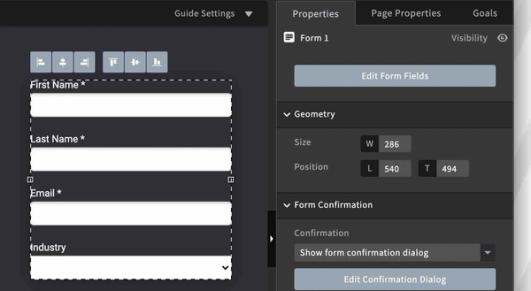
- Click on the Email * box to open the field settings. Then, verify that the Field Name and ID box is set to email. If you need to edit this text, uncheck the Auto-generate from Field Label and make your edits.
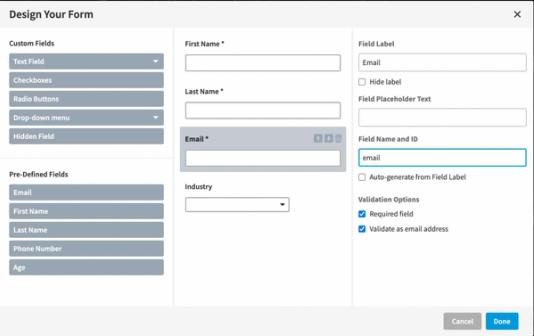
- Once you’ve verified the field name, click Done.
- If you made any changes to the form, click Save and then Republish on the top menu bar to implement your updates.
Smart builder
- In Unbounce, navigate to the page you want to edit, and click Edit at the bottom of the page.

- Inside of the form, click into the Email text box dropdown and select Edit Field.
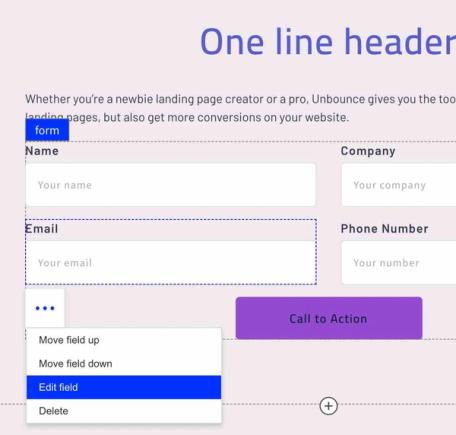
- In the Edit Field menu, verify that the Field Name/ID box is set to email.
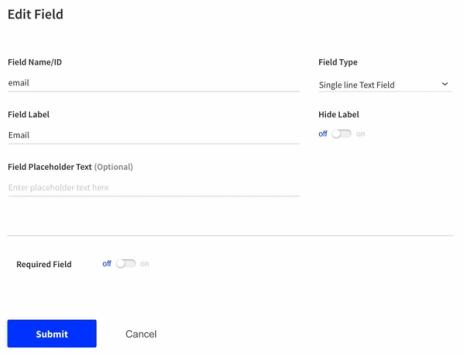
- Once you’ve verified the field name, click Submit.
- If you made any changes to the form, click Save and then Publish on the top menu bar to implement your updates.
Enable the integration in Klaviyo
- In Klaviyo, select the Integrations tab.
- Click Explore apps and search for Unbounce, then click the card.
- Then, click Install.
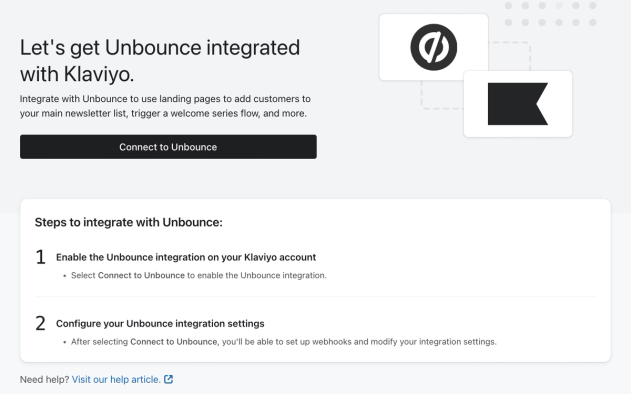
- Click Connect to Unbounce.
- Select the checkbox next to Add new Unbounce leads to a Klaviyo list to add new leads to a specific Klaviyo list. Choose the list from the Select a list dropdown. Adding leads to a list does not subscribe them to marketing messages.
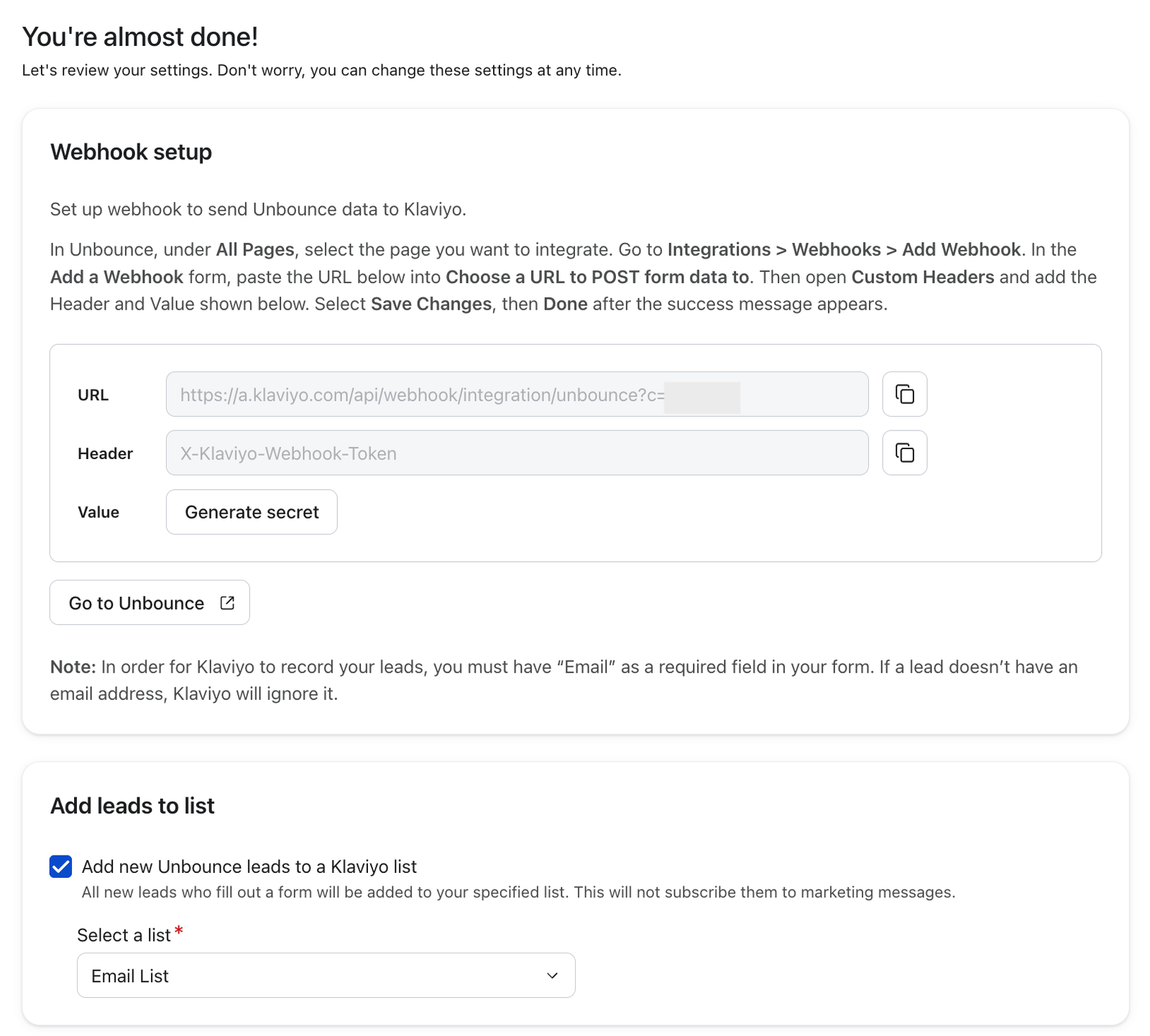
- Under Webhook setup, copy the URL and Header values. You’ll use these values to configure the webhook in Unbounce.
- Click Generate secret. Copy and store the secret in a safe place before clicking Done. You won’t be able to view the full secret again. Use this secret as the webhook’s Value in Unbounce.
- Click Complete setup.
Set up Unbounce webhooks
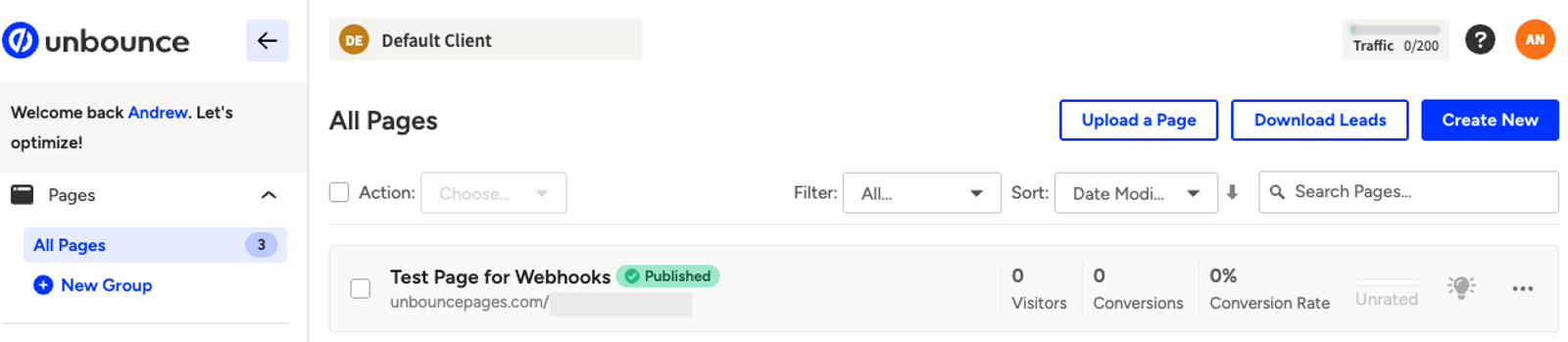
- Head to Unbounce. From the All Pages page in Unbounce, select the page you’d like to add your Klaviyo webhook to.
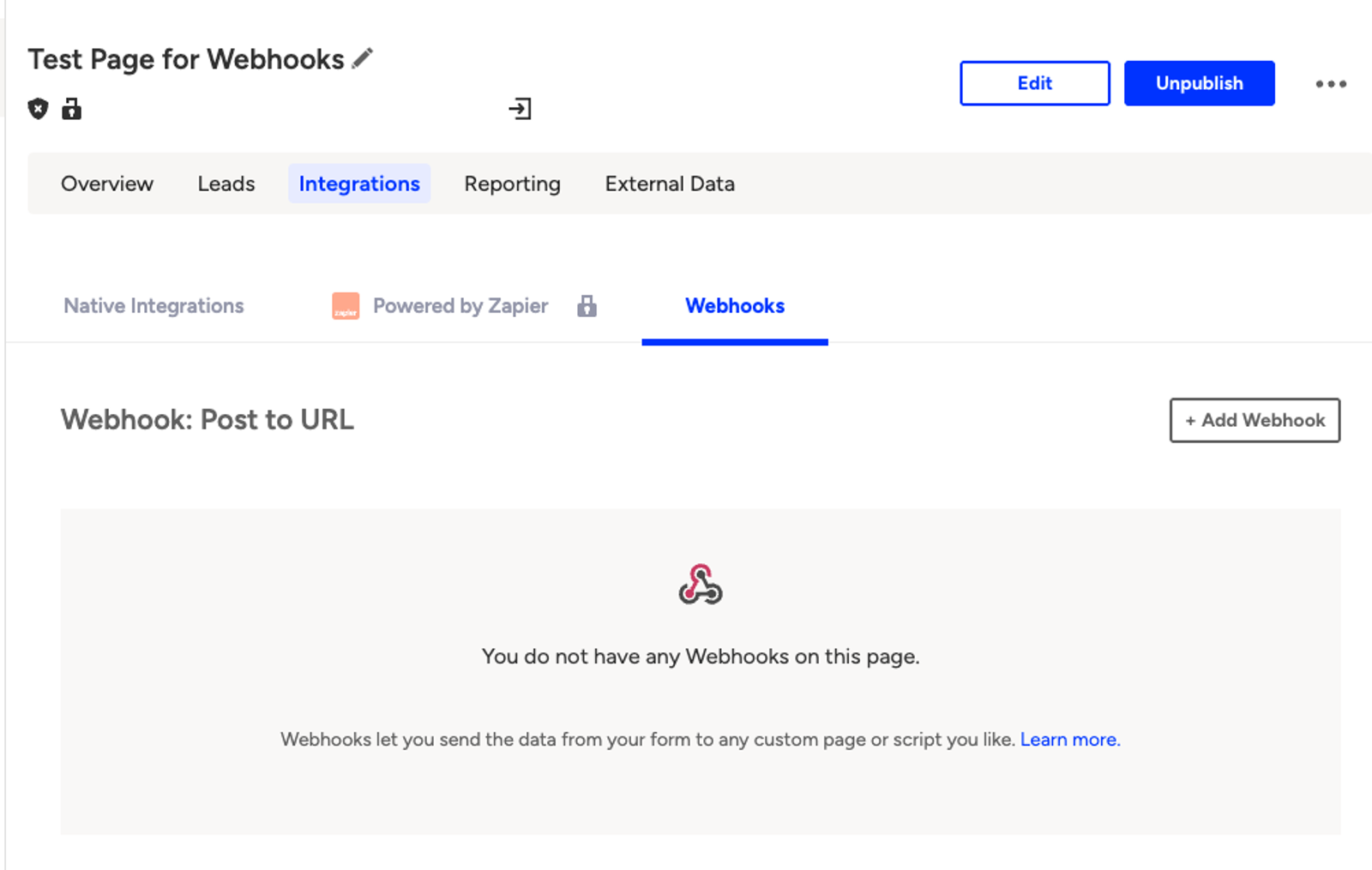
- Click on the Integrations tab, and select Webhooks > Add Webhook.
- Paste the URL from Klaviyo into the first text box under Choose a URL to POST form data to.
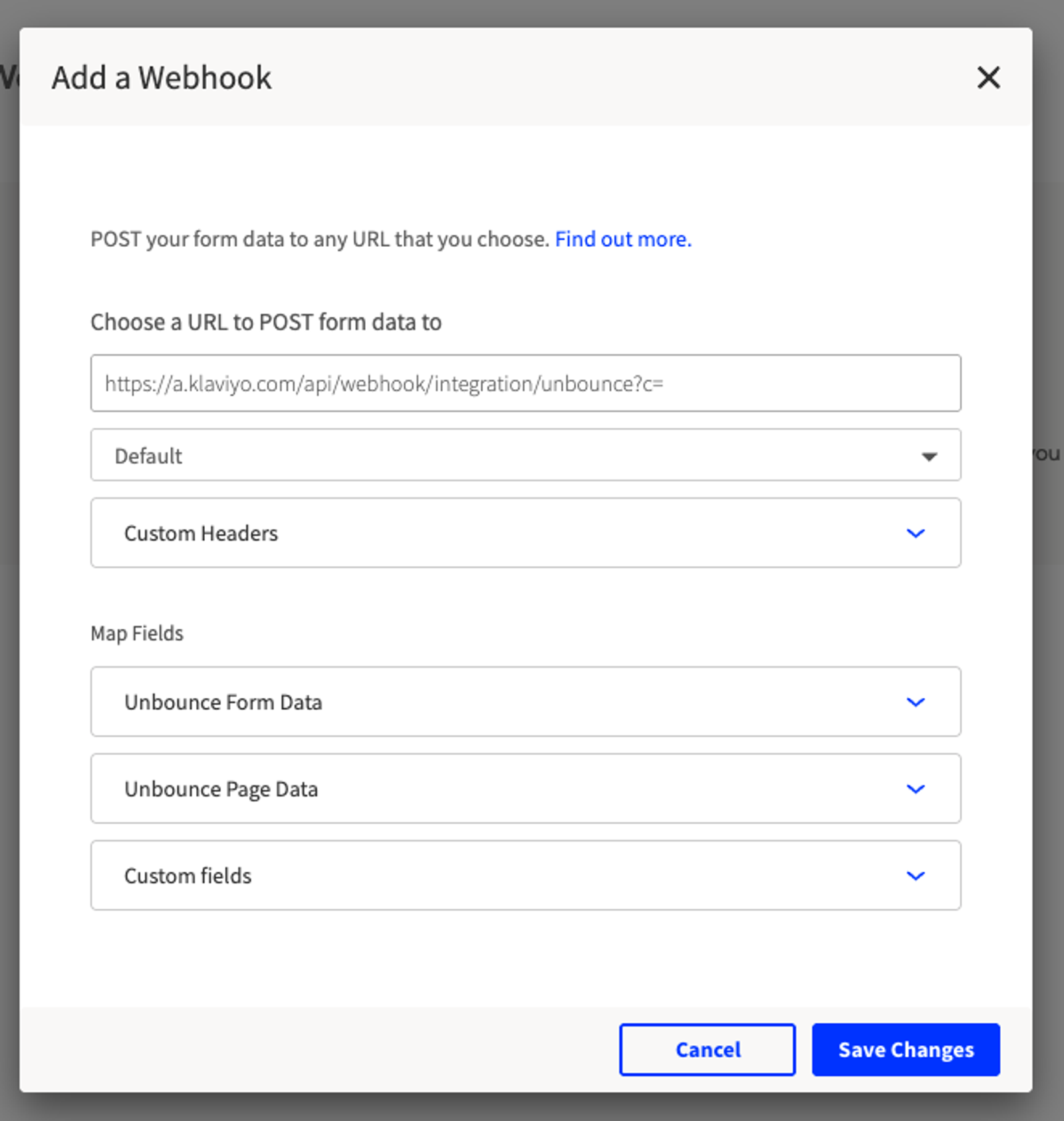
- Below the URL, there is a setting that says Default. Do not change that setting. It must be Default.
- Open the Custom Headers menu and click Add Custom Header. Paste the header from Klaviyo into the “Header(s)” field. Then paste the generated secret from Klaviyo into the “Value” field.
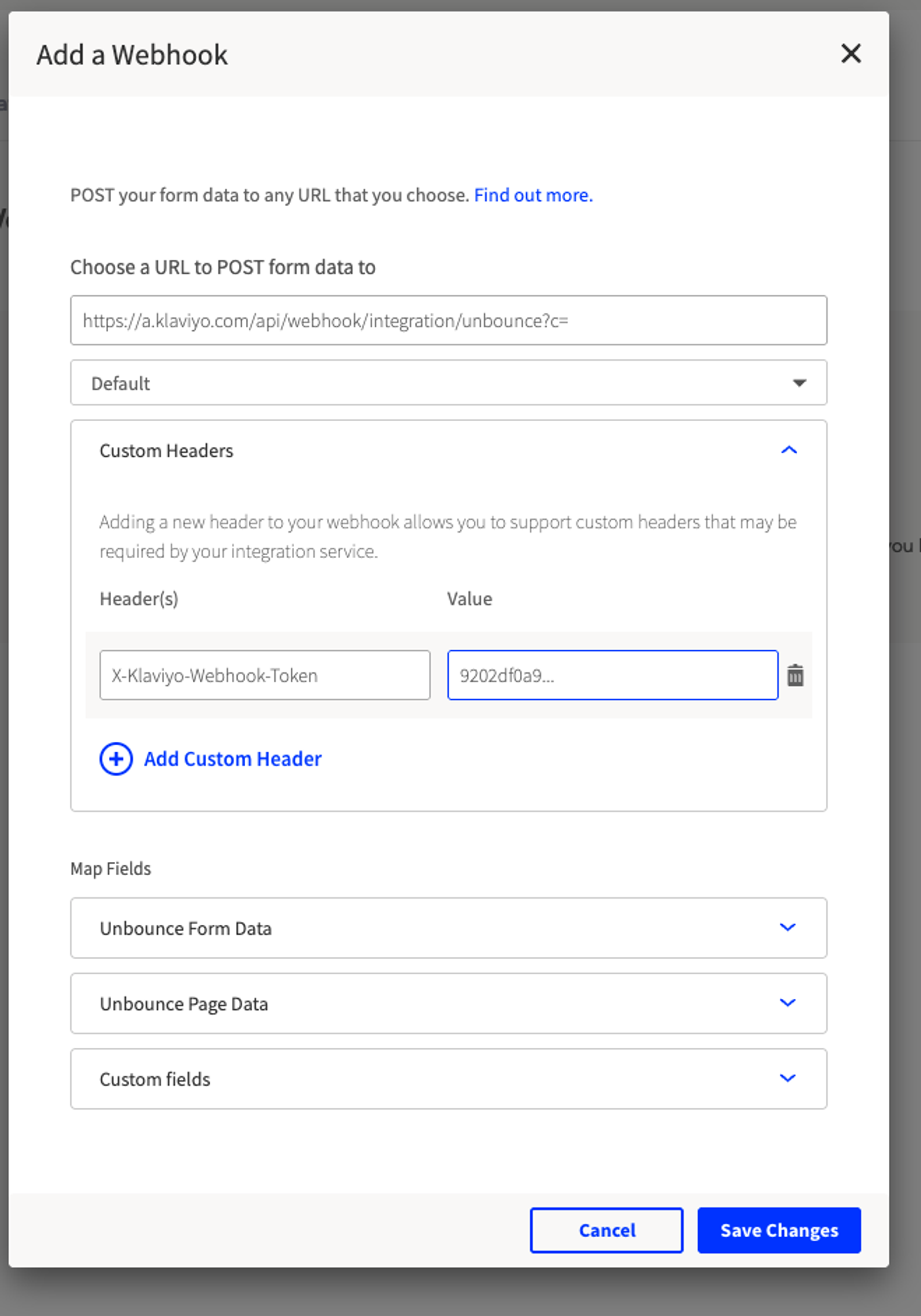
- Within Unbounce Form Data, map the email field to email. Klaviyo also accepts email_address and your_email. These field names are case-sensitive and must be lowercase. Submissions without a valid email address in a supported field are ignored.
- Once you’ve verified all fields, click Save Changes.
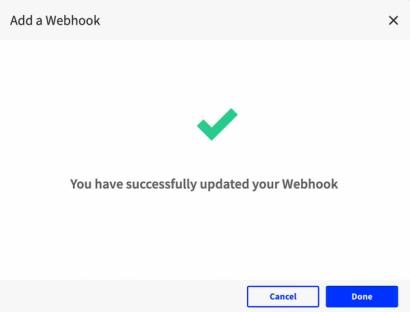
- After Unbounce confirms that your webhook was updated, click Done. Test a form submission as described below to confirm that Klaviyo receives it.
View Unbounce data in Klaviyo
To check your integration after you have added the Klaviyo webhook, create a new lead through your Unbounce page.
Klaviyo syncs leads through the Filled Out Form metric, which appears with an Unbounce icon next to it. To confirm that this is syncing properly to Klaviyo, navigate to Analytics > Metrics, and filter by Unbounce. Currently, Klaviyo syncs 1 metric with Unbounce: Filled Out Form. Select Filled Out Form to see data specific to this metric.
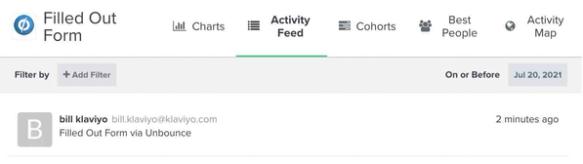
Click the Activity feed tab and look for a Filled Out Form event for your test submission. The event can belong to a new or existing profile. If you see it, your form submissions are syncing.
Klaviyo ignores submissions without a valid email address in a supported field. Make your email field required in Unbounce so visitors cannot submit the form without an address.
The Filled Out Form metric contains the following metadata, which can be used in segments and flows:
- Page ID
The unique ID of the Unbounce page where the form was submitted - Page Name
The name of the page in Unbounce - Page Variant
The variant of the page in Unbounce, as used in Unbounce’s Smart Traffic
Use Unbounce data in Klaviyo
Create a segment
If you want to send a specific email campaign to customers who responded to a specific variant of your landing page, you can create a segment in Klaviyo using Page Variant data.
- Navigate to Audience > Lists & segments in Klaviyo.
- Click Create, and select Segment.
- Enter a name for your segment. If you are naming it in a side panel, click Create segment to continue to the builder. Add the following conditions:
- If someone is in or not in a list: select is and choose your list. Add this optional condition with AND if you want to include only profiles from that list; otherwise, skip it.
- What someone has done (or not done): select Unbounce’s Filled Out Form metric, choose at least once, and choose the time period you want to check across.
- Click the Add filter icon next to the event condition. Select Page Variant and enter the variant you want to match next to equals.
- To limit the segment to a particular page, add another event filter for Page ID and enter that page’s ID next to equals. This keeps submissions from other pages with the same variant value out of the segment.
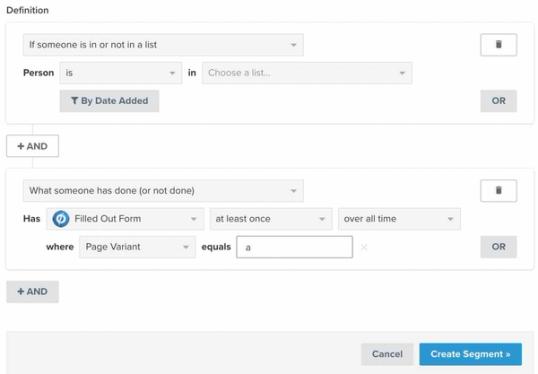
- Click Create segment when you are done.
Create a welcome flow
You can use Unbounce data to set up a 2–3 message welcome series triggered when leads are added to your email list. Use the same list you selected in the Unbounce integration settings. Adding a lead to that list does not subscribe them to marketing, so make sure you have their consent before sending marketing emails. See our guide on creating a welcome series for more information.
Troubleshooting
Form submissions aren’t appearing in Klaviyo
Check that your Unbounce webhook uses the URL and Header from Klaviyo’s Webhook setup section, and that its Value is the secret you generated. Keep the dropdown below the webhook URL set to Default and check the email mapping described above. Submit the form again and look for the new Filled Out Form event in Klaviyo.
Generating a new secret immediately invalidates the current secret. If you no longer have your secret, click Generate new secret in Klaviyo. Copy and store the new secret, update the Value in every Unbounce webhook using the old secret, and save your changes in Unbounce. Submissions using the old secret will not sync.
Form fields aren’t populating in my webhook setup
If your form fields aren’t appearing in your webhook setup, you may need to republish your page to resync the form fields.
To republish:
- Click into your page in Unbounce and go to the Edit screen.
- Choose anything on your page and alter it slightly, then click Save.
- Revert the change, and click Save again.
- Click Publish (or Republish, depending on which builder you’re using).
- Go back to the Webhooks tab of your Unbounce account and attempt the setup again. You should now be able to see the form fields populated in the webhook setup.
- If this problem persists, reach out to the Unbounce Support Team.
Outcome
You've now integrated Unbounce with Klaviyo and reviewed your synced data.
Additional resources
- Getting started with flows
Learn how to use flows, also known as automations or drip campaigns, in Klaviyo for personalized and automated communications to your customers, and learn how to set your first flow live.
- Getting started with segments
Learn how to create and use segments in Klaviyo, which are a powerful tool for understanding your audience and sending targeted messages.